My World Earth News Headline Animator

My World Earth News
Showing posts with label sanctions. Show all posts

Tuesday, December 27, 2011

Iran threatens to stop Gulf oil if sanctions widened


Iran’s Navy Commander Habibulah Sayari holds a news conference in Tehran, December 22, 2011, on its war games.


Iran threatened yesterday to stop the flow of oil through the Strait of Hormuz if foreign sanctions were imposed on its crude exports over its nuclear ambitions, a move that could trigger military conflict with economies dependent on Gulf oil.

Western tensions with Iran have increased since a November 8 report by the UN nuclear watchdog saying Tehran appears to have worked on designing an atomic bomb and may still be pursuing research to that end. Iran strongly denies this and says it is developing nuclear energy for peaceful purposes.


Monday, November 28, 2011

Lebanon will not implement Syria sanctions


Lebanese Foreign Minister Adnan Mansour (L) talks with his Cypriot counterpart Erato Kozakou Marcoullis in Nicosia November 25, 2011.


Lebanon will not implement the Arab League’s economic sanctions against Syria, Foreign Minister Adnan Mansour told Reuters today, because it had not agreed to them and believed they could hurt Lebanon.

“We do not agree with these sanctions and we will not go along with them,” Mansour said.

Iran body passes law expelling British ambassador


A bill to downgrade Iran’s relations with Britain got final approval today, state broadcaster IRIB reported, a day after parliament approved the measure compelling the government to expel the British ambassador.

“The members of the Guardian Council, after examination of the plan, have approved it unanimously,” Abbasali Kadkhodai, spokesman for the council, was quoted as saying on IRIB’s website.


Wednesday, November 9, 2011

Israel’s Barak dismisses talk of attacking Iran


Israel’s Defence Minister Ehud Barak arrives to the weekly cabinet meeting in Jerusalem on April 3, 2011


Defence Minister Ehud Barak today played down speculation that Israel intended to strike Iranian nuclear facilities, saying it had not decided to embark on any military operation.

“War is not a picnic. We want a picnic. We don’t want a war,” Barak told Israel Radio ahead of the release this week of an International Atomic Energy Agency (IAEA) report on Iran’s nuclear activity.

“(Israel) had not yet decided to embark on any operation,” he said, dismissing Israeli media speculation that he and Prime Minister Benjamin Netanyahu had chosen that option. ― Reuters

Calls for tougher sanctions against Iran following IAEA report

A UN nuclear watchdog report is expected to show concern that Iran benefited from foreign expertise to help develop technology that could be used to build atomic bombs, Western officials said yesterday.

Tehran is “clearly trying to reach out to nuclear scientists around the world,” a Western diplomat accredited to the UN agency in Vienna said, suggesting it was a case of Iran contacting individuals rather than their governments.

Other Western officials painted a similar picture of suspected foreign involvement in providing know-how for activities seen as geared to developing a nuclear weapons capability, but it was unclear how extensive it had been.


China warns of turmoil over Iran, mute on sanctions


A general view shows the nuclear power plant in Bushehr, about 1,215km south of Tehran, in this file photo of November 30, 2009. China warned on November 9, 2011 against turmoil in the Middle East from action over Iran’s nuclear programme.


China warned today against turmoil in the Middle East from action over Iran’s nuclear programme, but declined to comment on the possibility of new sanctions following a UN report that Iran appears to have worked on designing an atomic weapon.

Foreign Ministry spokesman Hong Lei said China was “studying” the International Atomic Energy Agency (IAEA) report, and repeated a call to resolve the issue peacefully through talks.


“I wish to point out that China opposes the proliferation of nuclear weapons, and disapproves of any Middle Eastern country developing nuclear weapons. As a signatory to the Nuclear Non-Proliferation Treaty, Iran bears the responsibilities of nuclear non-proliferation,” he told a daily news briefing.

“The Iranian side should also demonstrate flexibility and sincerity, and engage in serious cooperation with the agency,” Hong said, referring to the IAEA.

“I want to stress that avoiding fresh turmoil in the Middle Eastern security environment is important for both the region and for the international community.”

Hong made no mention of sanctions, and indicated China was in no rush to take the matter back to the United Nations Security Council, saying only that all sides should do more to promote dialogue and cooperation.

“I’ve already pointed out that China has consistently advocating using dialogue and cooperation to resolve the Iranian nuclear issue,” he said, when asked about the possibility of new unilateral US sanctions on Iran.

Chinese policy-makers are caught between their demand for Iranian oil and worry that the United States and its allies will demand harsher sanctions against Iran, even risk military action, after the IAEA concluded Iran appeared to have worked on designing an atomic weapon.

China has kept close ties with Iran but has also backed past UN Security Council resolutions criticising Iran’s position on nuclear issues and authorising limited sanctions.

But China has repeatedly resisted Western proposals for sanctions that could seriously curtail its energy and economic ties with Iran. As one of the Security Council’s five permanent members, China holds the power to veto any resolutions.

China has also denounced the United States and European Union for imposing their own separate sanctions on Iran, and said they should not take steps reaching beyond the UN resolutions.

“WHITE HOT”

A Chinese state newspaper said a standoff between Iran and the West over Iran’s nuclear plans could erupt in military conflict.

“It is clear that contention between the various sides over the Iranian nuclear issue has reached white hot levels and could even be on the precipice of a showdown,” the overseas edition of the People’s Daily said in a front-page commentary.

If Iran refused to back down in the face of growing US conviction that it was developing nuclear weapons, “the risks of war will grow”, said the paper, noting reports that Israel could consider a military strike on Iranian nuclear sites.

The People’s Daily is the top newspaper of China’s ruling Communist Party and broadly reflects official thinking, as well as the anxieties weighing on Beijing after the latest UN nuclear agency report.

China’s official Xinhua news agency also suggested that Beijing would respond warily to the report. The UN watchdog still “lacks a smoking gun”, Xinhua said in a commentary.

“There are no witnesses or physical evidence to prove that Iran is making nuclear weapons,” it said.

“In dealing with the Iran nuclear issue, it is extremely dangerous to rely on suspicions, and the destructive consequences of any armed action would endure for a long time.”

China is likely to face difficult choices as it tries to keep steady ties with the United States, which is likely to introduce new unilateral sanctions on Iran.

“If these sanctions harm China’s substantive interests, then China will have to respond in some way,” said Li Hong, the secretary general of the China Arms Control and Disarmament Association, a government-controlled body.

“It would certainly have an impact on bilateral relations,” Li said in an interview.

ONUS ON CHINA?

Iran is China’s third-largest crude oil supplier, shipping 20.3 million tonnes in the first nine months of the year, up by almost a third on the same time last year, according to Chinese data. Overall trade between the two countries grew to US$32.9 billion in value in the first nine months, up by 58 per cent.

“The onus will really be on China, as the only country whose economic relations with Iran have grown,” Suzanne Maloney an expert on Iran at the Brookings Institution, a think tank in Washington, said in a telephone interview.

Over the past year or more, China has quietly stalled on oil and gas investments in Iran, seeking to ward off stricter unilateral sanctions from Washington while preserving a foothold in Iran. But that implicit deal will come under growing pressure, especially from Congress, said Maloney.

“They’ve had a compromise for the past 18 months of a go-slow in investment. But it’s difficult to see how that bargain can hold in the wake of the latest revelations,” said Maloney.

Citing what it called “credible” information from member states and elsewhere, the IAEA said Iran appeared to have carried out activities applicable to developing nuclear weapons, such as high explosives testing and developing a trigger that could be used for an atomic bomb.

This week and last, China urged Iran to show flexibility over its nuclear programme and warned that the use of force to resolve the issue was the last thing the Middle East needed.

Li from the Chinese arms control association said Beijing was worried about the tension, but war remained a slim risk.

“Overall, I think the international conditions show governments couldn’t stomach armed conflict over Iran,” he said.

“The US economy is in poor shape, and Europe has its debt crisis,” he said. “Iran is not like Libya; it has the strength to counter attack.”

Meanwhile, France said today it wanted to bring together members of the UN Security Council after an International Atomic Energy Agency report said Iran had worked to develop an atomic bomb design.

“Convening of the UN Security Council is called for,” Foreign Minister Alain Juppe told RFI radio.

“We cannot accept this situation which is a threat,” said Juppe, adding that France was ready to toughen sanctions.

“We need hard sanctions that prevent Iran from continuing to obtain resources that allow it to pursue its activities in violation of all international rules,” said Juppe.

UN report reinforces worries over Iranian threat

Germany says it will push for resolution urging Iran to return to negotiating table; Hague: Britain considering how to raise pressure on Iran.


Friday, March 18, 2011

How British forces could enforce a no-fly zone

British forces will be heavily involved in the attempt to prevent Gaddafi crushing the uprising in Libya.

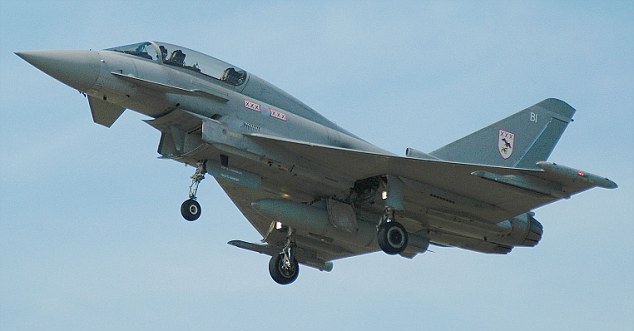
Military experts predict the RAF’s Typhoon fighter jets – which are not fully deployed in Afghanistan – are likely to be among the first sent out to establish and police the no-fly zone.

The multi-role jets are capable of delivering the latest high-accuracy bombs, and their capabilities as fighter aircraft far exceed those of Gaddafi’s ageing Russian jets.


The British fighters are likely to be deployed alongside French aircraft initially, although it is hoped they could be joined quickly by aircraft from at least one Arab nation, possibly Saudi Arabia or the United Arab Emirates.

Foreign Secretary William Hague indicated yesterday that the no-fly zone would be policed from land bases – avoiding criticism of the recent cuts to the Royal Navy, which severely limit the capacity of the UK to carry out airborne operations from the sea.

Allied forces could use French bases along the Mediterranean or the British base in Cyprus. Negotiations have also been under way about the possibility of operating some aircraft from bases in Arab countries.

Italy last night said it would make its military bases available to enforce the UN resolution. Its airbase at Sigonella in Sicily is one of the closest Nato bases to Libya.

U.S. navy aircraft carriers in the Mediterranean are initially expected to provide radar and logistical support.

The RAF’s ageing Nimrod reconnaissance aircraft, which were recently given a temporary reprieve from the scrapyard, could also play a role in monitoring the movement of Gaddafi’s forces. British special forces will also be involved in the operation. The size of the SAS has increased rapidly in recent years and experts believe special forces units could be deployed to Libya without affecting operations elsewhere.

They will be dropped behind enemy lines to identify potential targets for bombing raids. They could also be asked to carry out other covert missions designed to weaken the forces remaining loyal to the Libyan tyrant.

Experts last night suggested that British warships could also be deployed to the region to carry out bombardments along the coast or to protect merchant shipping from attacks by the Libyan navy.

Thursday, March 10, 2011

UK seeks to up Gaddafi pressure

The UK and France have sought to ramp up the pressure on Col Gaddafi ahead of Friday's EU summit, saying the Libyan leader has "lost any legitimacy".


Monday, February 28, 2011

Gaddafi's son 'caught on video urging loyalists to sacrifice themselves until the last bullet'

Colonel Gaddafi's son has been caught on video brandishing a semi-automatic rifle in the air and urging paramilitaries to sacrifice themselves until 'the last bullet'.

The chilling footage, shot in Tripoli at the weekend, makes a mockery of London School of Economics-educated Saif Al-Islam's claims he can reform Libya following 42 years of rule by his tyrant father.

Rather than looking like a moderate reformer, the 38-year-old looks like a 'rabble-rousing gangster', according to a pro-democracy protester who leaked the video after recording it on his mobile phone.

 Defiant: Video footage apparently shows Colonel Gaddafi's son Saif al-Islam brandishing a rifle and calling on supporters to fight 'to the last bull

 'Gangster': The footage, filmed secretly on a mobile phone, was taken near Green Square in Tripoli


'Moderate': Saif has claimed Tripoli was peaceful in TV interviews and the scale of the violence was exaggerated


Over the weekend, Saif gave a TV interview in which he said: 'Everything is calm. Everything is peaceful.

'The point is there's a big gap between reality and the media reports.'

The second son of the dictator appeared relaxed as he spoke about reforms for ensuring a peaceful future.

But the unauthorised video paints a very different picture. It shows Saif standing on the roof of a 4x4, dressed in a black bomber jacket and holding the rifle in his left hand.

Addressing armed supporters near Green Square, in the centre of Tripoli, he shouts: 'Brothers, God willing keep the spirits high.

'Rumours are emanating from enemy forces saying that the police fled. Today we'll show them that the police are with Libya.

'We have the means, the equipment, the weapons, we're fine. It's your homeland. Don't lose it.

'Those against you are nothing - they're b******s.'

Towards the end of his address, Saif swings his gun in the air and urges them to 'fight until the last minute, until the last bullet'.

A source who helped to get the video out of Libya said Saif's men were like gangsters.

They said: 'Saif pretends to be an intellectual and a moderate, but he is a rabble-rousing thug just like his father.'

Saif has been considered Gaddafi's heir apparent since declaring in 2002 that Libya's future was: 'First thing democracy, second thing democracy, third thing democracy.'

He completed a doctorate at the LSE in 2008. He met former Labour trade minister Peter Mandelson at a Corfu villa the week before it was announced that the Lockerbie bomber Abdelbaset Al-Megrahi would be released from a Scottish prison.

Prince Andrew has also invited Saif as a guest to Buckingham Palace and Windsor Castle and the two men have also met in Tripoli.

He also regularly boasts that Tony Blair is a 'good friend' and they have met when Mr Blair was Prime Minister.

Last Friday, Saif told journalists in Tripoli: 'If you hear fireworks, don't mistake it for shooting.'


 Defiant: A rebel stands in the vandalised former bedroom used by Colonel Gaddafi at Benghazi airport

 Clashes: Soldiers from the elite Khamis Brigade - led by Gaddafi's youngest son Khamis, check vehicles near Zawiya


Libya: more bloodshed in battle for Misrata-Libya: fighting continues in key towns -Britain urges Libya to end violence - Sanctions to hit Libya include asset freeze, passport ban and no arms sales


World raises pressure on Libya, battles for key towns


Anti-government rebels carry ammunition in a base for training and recruiting rebels for the army in Benghazi on February 28, 2011

Foreign powers accelerated efforts to help oust Libyan leader Muammar Gaddafi yesterday as rebels fought government forces trying to take back strategic coastal cities on either side of the capital Tripoli.

Gaddafi’s forces have been trying for days to push back a revolt that has won over large parts of the military, ended his control over eastern Libya and is fending off government assaults in western cities near Tripoli.

It is difficult for reporters to move around western Libya and reports of fighting were hard to verify independently.


But witnesses in both Misrata, a city of a half a million people 200km to the east of Tripoli, and Zawiyah, a strategic refinery town 50km to the west, said government forces were mounting or preparing attacks.

“An aircraft was shot down this morning while it was firing on the local radio station. Protesters captured its crew,” a witness in Misrata, Mohamed, told Reuters by telephone.

“Fighting to control the military air base started last night and is still going on. Gaddafi’s forces control only a small part of the base. Protesters control a large part of this base where there is ammunition.”

A Libyan government source denied the report.

A resident of Zawiyah, called Ibrahim, told Reuters by telephone: “We are expecting attacks at any moment by brigades belonging to (Gaddafi’s son) Khamis. They are on the outskirts of the town, about 5-7km away. They are in large numbers.”

In the capital, Gaddafi’s last stronghold, a Reuters reporter saw about 400 people protesting in a square in the Tajoura district, an area already partly outside his control.

Soon after, men in sports utility vehicles pulled up and fired into the air.

SANCTIONS

Foreign governments are increasing the pressure on Gaddafi to leave in the hope of ending fighting that has claimed at least 1,000 lives and restoring order to a country that accounts for 2 per cent of the world’s oil production.

The UN Security Council on Saturday slapped sanctions on Gaddafi and other Libyan officials, imposed an arms embargo and froze Libyan assets.

European Union governments approved their sanctions against Gaddafi in Brussels yesterday, implementing the UN resolution sooner than expected.

The Pentagon said it was repositioning US naval and air forces around Libya “to provide options and flexibility”. The US Sixth Fleet operates out of Italy.

In The Hague, the International Criminal Court prosecutor said he would finish a preliminary examination of the violence within days, after which he could open a full inquiry — a step mandated by the Council that could have taken months.

France proposed an emergency summit of EU leaders for Thursday, EU diplomats said.

In an address to the UN Human Rights Council in Geneva, US Secretary of State Hillary Clinton said Gaddafi was using “mercenaries and thugs” to repress his people and that he must step down immediately.

“Gaddafi and those around him must be held accountable for these acts, which violate international legal obligations and common decency,” Clinton said, adding that nothing was off the table as the international community considers its next steps.

However, in Washington, a White House spokesman declined to rule out that Gaddafi could be helped to go into exile.

A US official in Geneva said a central aim of sanctions was to “send a message not only to Gaddafi ... but to the people around Gaddafi, who are the ones we’re really seeking to influence”.

German Foreign Minister Guido Westerwelle said after meeting Clinton that he was proposing a 60-day freeze on money transfers to Libya, and believed other countries were open to the idea.

“We must do everything to ensure that no money is going into the hands of the Libyan dictator’s family, and that they have no opportunity to hire new foreign soldiers to repress their people,” he said.

But there was less support among foreign ministers in Geneva for proposals to stop Gaddafi attacking rebels from the air.

Prime Minister David Cameron said he was asking his military staff to work on the idea with allies. But Russian Foreign Minister Sergei Lavrov, asked in Geneva if he had discussed a no-fly zone in his meeting with Clinton, retorted:

“Absolutely not. It was not mentioned by anyone.”

RESENTMENT

Revolutions in neighbouring Tunisia and Egypt have helped to ignite resentment of four decades of often bloody political repression under Gaddafi as well as his failure to use Libya’s oil wealth to tackle widespread poverty and lack of opportunity.

The 68-year-old leader has vowed to fight to the death, but a spokesman struck a new, conciliatory tone yesterday.

Mussa Ibrahim told reporters in Tripoli that government forces had fired on civilians, but said this was because they were not trained to deal with civilian unrest.

He said the government was still in control of Zawiyah, even though reporters who were taken there at the weekend saw a town centre under rebel control.

“What you saw was only the centre,” he said. “We allowed, we let these people with their guns to stand there. Zawiyah has not fallen. The government could have easily killed them and has not done so, because the government has not been bloody.”

In the eastern city of Benghazi, opponents of Gaddafi said they had formed a National Libyan Council to be the “face” of the revolution. They said they wanted no foreign intervention.

A senior government source said the government was sending a envoy to Benghazi yesterday night to deliver food, medicine and medical equipment.

Regional experts expect rebels eventually to take the capital and kill or capture Gaddafi, but add that he has the firepower to foment chaos or civil war — a prospect he and his sons have warned of.

OIL

Opposition forces are largely in control of Libya’s oil facilities, which are mostly located in the east.

Fatih Birol, chief economist of the International Energy Agency, told Reuters Insider TV in Paris that industry reports suggested Libya’s oil output had been halved as expatriate workers pulled out.

Bank of America Merrill Lynch estimated in a note to clients that Libya was losing about 1.2 million barrels per day, or 75 per cent of its pre-revolt output, and said the unrest could mean Libyan supplies were unavailable for months.

Industry sources said actual shipments were at a standstill.

Benchmark Brent oil futures were slightly lower at just under US$112 (RM341) a barrel.

Wealthy states have sent planes and ships to bring home expatriate workers but many more, from poorer countries, are stranded. Thousands of Egyptians have been streaming into Tunisia, complaining that Cairo has done nothing to help them.

The United Nations refugee agency said on Sunday nearly 100,000 people have fled violence in Libya in the past week in a growing humanitarian crisis.

Thursday, September 23, 2010

Ahmadinejad tells UN most blame US government for 9/11

Iranian President Mahmoud Ahmadinejad told the United Nations yesterday most people believe the US government was behind the attacks of Sept. 11, 2001, prompting the US and European delegations to leave the hall in protest.

Addressing the General Assembly, he said it was mostly US government officials and statesmen who believed al Qaeda Islamist militants carried out the suicide hijacking attacks that brought down New York’s World Trade Center — less than 6km from where the Iranian president was speaking.

Ahmadinejad walks alone as he does on most things, heading to an official meeting in Tehran Dec 14, 2009


Another theory, he said, was “that some segments within the US government orchestrated the attack to reverse the declining American economy, and its grips on the Middle East, in order to save the Zionist regime.” Ahmadinejad usually refers to Israel as the “Zionist regime.”

“The majority of the American people as well as most nations and politicians around the world agree with this view,” Ahmadinejad told the 192-nation assembly, calling on the United Nations to establish “an independent fact-finding group” to look into the events of Sept. 11.

As in past years, the US delegation walked out during Ahmadinejad’s speech. It was joined by all 27 European Union delegations and several other countries.

Mark Kornblau, spokesman for the US mission to the United Nations, said Ahmadinejad chose “to spout vile conspiracy theories and anti-Semitic slurs that are as abhorrent and delusional as they are predictable.”

White House spokesman Bill Burton said President Barack Obama thought the comments “utterly outrageous and offensive — especially in the city where the 9/11 attacks occurred.”

EU foreign policy chief Catherine Ashton said the remarks were “outrageous and unacceptable.”

‘COVERED UP’

Ahmadinejad said some evidence that could support alternative theories had been “covered up” — passports located in the rubble and a video of an unknown individual who had been “involved in oil deals with some American officials.”

As he had in past years, the Iranian president used the General Assembly podium to attack Iran’s other archfoe, Israel, and to defend the right of his country to a nuclear program that Western powers fear is aimed at developing arms.

“This regime (Israel), which enjoys the absolute support of some Western countries, regularly threatens the countries in the region and continues publicly announced assassination of Palestinian figures and others, while Palestinian defenders ... are labelled as terrorists and anti-Semites,” he said.

“All values, even the freedom of expression, in Europe and the United States are being sacrificed at the altar of Zionism,” Ahmadinejad said.

The Iranian president previously raised doubts about the Holocaust of the Jews in World War Two and said Israel had no right to exist.

Tehran has been hit with four rounds of UN sanctions for refusing to halt its nuclear enrichment program. Obama earlier told the assembly the door to diplomacy was still open for Iran, but it needed to prove its atomic program is peaceful, as it says it is.

Two days ago, foreign ministers from the five permanent UN Security Council members and Germany said they hoped for a negotiated solution to the standoff with Tehran.

Ahmadinejad criticised the Security Council for imposing sanctions on his country, saying the penalties were “destroying the remaining credibility” of the 15-nation body


1 month FREE when join ChristianSingles.com

justmysize.com (Hanesbrands Inc.)

Tuesday, August 3, 2010

Iran’s Ahmadinejad calls for TV debate with Obama


Iranian President Mahmoud Ahmadinejad called on US President Barack Obama yesterday to face him in a televised one-on-one debate to see who has the best solutions for the world’s problems.

The proposal comes as Iran deals with a new wave of international sanctions driven by Washington aimed at putting pressure on the Islamic Republic over its nuclear programme.

“Toward the end of summer we will hopefully be there for the (UN) General Assembly and I will be ready for one-on-one talks with Mr Obama, in front of the media of course,” Ahmadinejad told a conference of Iranian expatriates in Tehran.


“We will offer our solutions for world issues to see whose solutions are better.”

Ahmadinejad suggested such a debate last September, which was not taken up by Washington. He said Obama’s predecessor, George W. Bush, had declined similar invitations because he was “scared.”

Denis McDonough, chief of staff at the White House National Security Council, was non-committal about a potential presidential encounter.

Asked by CNN whether he would leave open the possibility of a meeting between Obama and Ahmadinejad, McDonough said: “I’m not leaving it open and I’m not closing it.”

Iran, the world’s fifth-largest oil producer, says its nuclear programme is a peaceful bid to produce electricity.

But its uranium enrichment activities, a process which can have both civilian and military uses, has fed fears in some countries that it is trying to build a nuclear weapon.

In his speech, the Iranian president mocked the sanctions and the potential for a military strike against Iran’s nuclear facilities, an option that the United States and Israel say they do not rule out.

“Who do you think is going to attack us? The Israeli regime? ... We don’t consider the regime in our equations, let alone attacking us,” he said.

“They say we’ll issue sanctions? Okay, do it. How many resolutions have you issued so far? Four? Make it 4,000,” he said to loud applause from the conference.

Both Iran and the United States have indicated willingness to return to nuclear talks which stalled last October, leading to the new sanctions.

Amid the anti-American rhetoric in which he said US policy was based on colonialism and the “law of the jungle,” Ahmadinejad said he was ready for talks “based on justice and respect.”

“We are ready to hold talks at the highest level,” he said. “We have always favoured talks, Iranians have never, ever favoured war.”


Monday, August 2, 2010

Brazil offers asylum to Iranian woman facing stoning


Lula said the Iranian president would accede to his request if their ties meant anything.

Brazilian President Luiz Inacio Lula da Silva has called on Iranian President Mahmoud Ahmadinejad to allow a woman sentenced in Iran to death by stoning to accept an offer of asylum in Brazil, local media reported.

The sentence imposed on Sakineh Mohammadi Ashtiani for an extra-marital relationship, which she denies, has caused an international outcry. It has been suspended pending a review by Iran’s judiciary but could still be carried out.

“I call on the supreme leader of Iran, Mahmoud Ahmadinejad, to permit Brazil to grant asylum to this woman,” state radio reported him as saying yesterday.


The two nations have drawn closer this year after Brazil pioneered diplomatic efforts backing Iran’s uranium enrichment work, which Tehran says it needs to produce power and for medical purposes. Many Western nations believe it is a front for developing a nuclear bomb.

Human rights group Amnesty International said Mohammadi Ashtiani was convicted in 2006 of having an “illicit relationship” with two men and received 99 lashes as her sentence.

Despite this, the rights group said she was subsequently convicted of “adultery while being married,” which it said she denied, and for which she was sentenced to death by stoning.

The United States, the European Union, Britain and international human rights groups appealed for a stay of execution.

Earlier this week, in response to an online campaign in Brazil calling on him to intervene, Lula said he could not call on other leaders to disregard the laws of their country.

But his comments yesterday suggested he was willing to use his strengthened ties with Ahmadinejad to push for clemency for Mohammadi Ashtiani.

“If my friendship with the president of Iran is worth anything and if she is causing unease there, we will willingly receive her here,” Agencia Folha reported Lula as saying, adding he said he would call his Iranian counterpart to discuss it.

Lula was speaking during an electoral campaign event for his party’s chosen presidential candidate, Dilma Rousseff.

Lula will complete his second term in December and cannot run a third consecutive time in the elections due on October 3


Iranian women's rugby team take to the field wearing modesty-preserving headscarves and tracksuits


Photobucket
Arrival: The team enters the playing field for the 'Cortina' seven-a-side tournament
On the ball: Iran's Zohre Eyni, left, is challenged by Italy's Sara Pettinelli during the clash which Italy won

Photobucket
Come back here: Iran's Farzaneh Navab Rad, right, is challenged by Italy's Federica Carlet


If the rugby-playing women of Iran's national sevens team had cauliflower ears, no-one could tell.

Kitted out in tight-fitting headscarves and full tracksuits to protect their modesty, the players caused quite a stir when they played in Europe for the first time.

Taking to the field in a women's seven-a-side tournament in Cortina D'Ampezzo, Italy, they were dealt a 10-0 by the host nation and then suffered a further 33-0 setback in a second game.


Photobucket
Safe hands: Iran's Nazanin Ammanyan, left, is challenged by Italy's Michela Este during the tournament

Photobucket
Representing Iran: Female coach Fatemeh Moolai, with arm raised, talks to her players during the women's rugby sevens tournament where the Iran team appeared in Europe for the first time

Photobucket
But the players, whose hands and faces were the only areas of skin on public view, bounced back, defeating local side Valsugana 10-3.

In all the matches the team played wearing the 'maghnaeh', a veil that fully covers the head, shoulders and neck, along with red tracksuit tops and bottoms.

A quarter of a century ago, in the early years of the 1979 Islamic revolution when competitive sports for women were strongly discouraged, it would have been unthinkable for Iranian women to play a sport as physical as rugby.

Iranian team coach Fatme Molai, who has been in the job for four years, said: 'Wearing a veil does not change our method of play - clothes are something you wear and don't influence what you know how to do.

'To be honest the federation are looking at other head covers which are perhaps more practical.

'This was our first tournament in Europe and although we didn't win as we did in Laos and Thailand I am very happy.'
Captain Zohre Eyni, 22, said: 'First I played football but I now play rugby as I really enjoy it but my family are not so sure it is the right thing for a woman.

'The whole team has learnt how to keep the veil in place so that it doesn't interfere with play and I think we have shown that even a physical game like rugby can be played in a veil.

'There are no risks playing in a veil, as I said what is important is that you arrange it safe and well, what you have to be careful with is losing your tracksuit bottoms in a tackle or scrum.'

In an interview with Al Jazeera, Alireza Iraj, Tehran women's rugby coach, said as a man he had to stick with one of Iran's Islamic rules which states that members of the opposite sex cannot touch each other unless they are married couples or immediate members of a family.
When advising the team on how to tackle, Iraj keeps a decent distance away from the women and then instructs one of the players to demonstrate how to grab an opponent rather than carrying out the move himself.

Women's rugby was first introduced to Iran 10 years ago, and has grown in popularity ever since.


Iran says to give crushing response to possible U.S. attack-Iran stocks hit all-time high despite sanctions


Tehran Stock Market

An Iranian military officer said Monday that Iran's armed forces have prepared a crushing plan to respond to any possible aggression of the U.S. or the Zionist regime of Israel, the official IRNA news agency reported.

Political Deputy of the Islamic Revolution Guards Corps (IRGC) Yadollah Javani made the remarks reacting to the Sunday statement of the U.S. Chairman of the Joint Chiefs of Staff Mike Mullen, the report said.


Mullen said Sunday the United States has a plan in place to attack Iran, if it is necessary.

"Military actions have been on the table and remain on the table" for curbing Iran's nuclear ambition, Mullen, the highest- ranking U.S. military officer, told NBC's "Meet the Press".

When asked if the military has a plan in place to attack Iran when needed, he replied, "we do."

"The U.S. and the Zionist regime will not dare to make a military attack against Iran," Javani said, adding that Mullen's remarks were just a "psychological operation," according to IRNA.

They had made similar statements before and such threats were usually made "for exerting pressure on Iran in its nuclear talks and for winning concession," Javani was quoted as saying.

Any mistake by the Americans would endanger security of the entire region, Javani threatened.

"And as it was said before, the Persian Gulf would be safe either for all or for none ... The Persian Gulf is a strategic region. If its security is in danger, this will jeopardize their ( Americans') interests, too, and our response would be tough," IRNA quoted him as saying.

The United States and Israelis have refused to rule out the possibility on launching unilateral military strike against Iran's nuclear facilities.

Iran Shares hit all high despite tough sanctions.

Share prices in Iran notched up an all-time high on Monday despite tough economic sanctions world powers imposed on the Islamic republic over its nuclear programme, officials and reports said.

The Tehran Stock Exchange's main TEPIX index gained 1.31 percent to end trading at 16,078 points, on turnover of 172 million shares worth 450 billion rials (almost 45 million dollars), according to the bourse's website.

ISNA news agency said the close represented a record high for the 43-year-old stock market.

The index has now posted a 28 percent jump since March 20, when it reached 12,537 points on the last day of the Iranian year.

The upsurge has come despite sanctions imposed by the UN Security Council on June 9 which were followed by separate punitive measures by the United States and the European Union.

Experts said stocks were boosted by a government decision to sell off 18 percent of its equity in two major automobile companies, Iran Khodro and Saipa Automotive Manufacturing, for 430 million dollars and 1.5 billion dollars respectively.

They said the government's attempts to privatise some top banks and companies have also helped keep market sentiment buoyant.

Tehran Stock Exchange vice president Mohammad Reza Rahbar said an overall lack of investment options was also helping drive share prices higher.

Iranian media reports said the bullish stock market trend is due to prevailing low bank interest rates and investments in the construction sector.

Rahbar also cited some specific measures taken by the bourse which was helping the market, adding that volumes had been buoyant in recent months.

He said the daily volume was worth 45 to 50 million dollars currently.

"The exchange has taken measures to have more transparency in order to boost public confidence. I am optimistic that more investors will enter the market," Rahbar was quoted as saying by Donaye e-Ektesad newspaper.

The market surge comes despite tough economic sanctions imposed by the United Nations and the world powers.

The European Union sanctions are particularly tough as they are designed to strike at Iran's vital energy sector, as well as its banking and transport segments.

They include a ban on the sale of equipment, technology and services to the energy sector, hitting activities in refining, liquefied natural gas, exploration and production.

The Iranian banking sector was also hit by European restrictions, forcing any transactions over 40,000 euros (52,000 dollars) to be authorised by EU governments before they can go ahead.

Some 330 Iranian companies are listed on the Tehran Stock Exchange having a total market capitalisation of more than 75 billion dollars.


Friday, July 23, 2010

EU envoys endorse sanctions against Iran


BRUSSELS — The European Union reached agreement Thursday on a package of sanctions against Iran which targets Tehran's energy sector over its refusal to halt sensitive nuclear work, an EU diplomat said.

Photobucket
A general view shows the Bushehr nuclear power plant

Ambassadors from the 27 EU member states met in Brussels to endorse the sanctions, which include measures against the oil and gas industry and must be approved at a meeting of foreign ministers on Monday to come into force.


"The text on the restrictive measures against Iran have been adopted," the diplomat said on condition of anonymity.

The UN Security Council imposed a fourth set of sanctions on Tehran in early June, but EU leaders and the United States decided shortly after to impose their own penalties against the Iranian energy sector.

The sanctions are part of a twin-track approach with EU foreign affairs chief Catherine Ashton seeking to revive moribund talks between Iran and six world powers -- the United States, Britain, France, Germany, Russia and China.

Western powers have demanded that Iran suspend its uranium enrichment programme, fearing that Tehran would use the material to build a nuclear bomb. Tehran says that its atomic programme is a peaceful drive to produce energy.

EU leaders agreed at a June 17 summit to impose a ban on new investment, technical assistance and technology transfers to Iran's huge gas and oil industry, particularly for refining and liquefied natural gas.

Iran is the world's fourth largest producer of crude oil but it imports 40 percent of its fuel needs because it lacks enough refining capabilities to meet demand.

The US and EU sanctions, seen as much tougher than UN sanctions, were "expected to have a material impact on the country's energy industry," the International Energy Agency said.

The IEA noted that it was "significant" that China and Russia had agreed to back the UN sanctions but that those did not include specific measures aimed at Iran's energy sector.

The US and EU sanctions were harder, and "longer term, development of the country's oil and gas industry will clearly be adversely impacted", the IEA said. "Iran's growing gas and natural gas liquids projects are expected to be hardest hit."

The EU measures also target the Islamic republic's transportation, banking and insurance sectors, and slap new visa bans and asset freezes on the Islamic Revolutionary Guard Corps.

"These sanctions are suprisingly strong," said Mark Fitzpatrick, director of the nonproliferation programme at the International Institute for Strategic Studies in London. "They go much further than the UN sanctions."

Fitzpatrick added: "For the first time Iran will face biting sanctions that will significantly impact its economy."

The sanctions "could nevertheless give reasons to Iran to go back to the negotiating table," he said.

"In the past, Iran has always moved once it was under pressure of the international community."

EU foreign ministers, during their meeting on Monday, will urge Iran to set a date for new talks, according to draft conclusions obtained by AFP.

The last high-level talks between Iran and the six world powers were held in Geneva in October 2009 when the two sides agreed a nuclear fuel swap that has since stalled.

Iranian Foreign Minister Manouchehr Mottaki said last week that talks could begin in September after Ashton reached out to Iran's chief nuclear negotiator Saeed Jalili in a letter in June.

According to the draft conclusions, EU foreign ministers will call on "Iran to seize this opportunity to allay the concerns of the international community about its nuclear programme and agree on a concrete date for talks with the EU High Representative, together with the six countries."


Clinton Denounces North Korean Belligerence, Myanmar Oppression


Photobucket
"A key element of our strategy is to strengthen regional and global institutions," Hillary Clinton said

July 23 (Bloomberg) -- Secretary of State Hillary Clinton denounced North Korean aggression and urged Myanmar to make its first elections in two decades more democratic.


“Here in Asia, an isolated and belligerent North Korea has embarked on a campaign of provocative, dangerous behavior,” Clinton told the 27-member Asean Security Forum in Hanoi today. “Peaceful resolution of the issues on the Korean Peninsula will be possible only if North Korea fundamentally changes its behavior.”

The remarks, made in the presence of North Korean Foreign Minister Pak Ui Chun, came two days after Clinton announced new U.S. sanctions against the regime for sinking a South Korean warship in March. North Korea yesterday attacked her actions and maintained that it didn’t torpedo the corvette Cheonan.

Clinton also used her speech to put pressure on Myanmar, an Asean member that she referred to by its former name of Burma.

“The United States also remains deeply concerned about the oppression taking place in Burma, including restrictive electoral laws that further stifle the lives of the Burmese and make the possibility of free and fair elections this year unlikely,” she said, according to a State Department transcript. “We urge Burma to put in place the necessary conditions for credible elections, including releasing all political prisoners, respecting basic human rights, and ceasing attacks against ethnic minorities.”


Related Posts Plugin for WordPress, Blogger...

My Headlines World News Today

Celebrity Gossip Scandal News

Celebrity Uncensored Leaked Scandal News Photos