My World Earth News Headline Animator

My World Earth News
Showing posts with label Osamabinladen. Show all posts

Monday, October 10, 2011

Obama's secret death warrant on al-Awlaki revealed

President Obama's secret memorandum authorising the killing of Anwar al-Awlaki was only legally valid if he could not be taken alive, it has emerged.

The legal writ, issued by the Justice Department, tackled the issues surrounding the targeted killing of a U.S. citizen by the American government - on the surface an unconstitutional act.


The issuing of the document followed fraught negotiations between administration officials and lawyers at the DOJ.Constitutional? Anwar al-Awlaki - a U.S. born citizen - was killed using secret authorisation from the justice department


Killed: Anwar al-Awlaki, left, and Osama bin Laden have both died following attacks by the U.S.legal? Officials at both the White House and the Justice Department have since refused all requests to answer how fifth amendment rights - guaranteeing a fair trial for all U.S. citizens - were satisfied by the secret memorandum


Officials at both the White House and the Justice Department have since refused all requests to answer how fifth amendment rights - guaranteeing a fair trial for all U.S. citizens - were satisfied by the secret memorandum.

The New York Times revealed more information regarding the secret document today.

The paper reported the roughly 50-page document was completed by the DOJ's legal Counsel around June last year.

According to the paper: 'The deliberations to craft the memo included meetings in the White House Situation Room involving top lawyers for the Pentagon, State Department, National Security Council and intelligence agencies.

'It was principally drafted by David Barron and Martin Lederman, who were both lawyers in the Office of Legal Counsel at the time, and was signed by Mr. Barron.'

The news follows the revelation that American militants like Anwar al-Awlaki are placed on a kill or capture list by a secretive panel of senior government aides.

Once the panel adds a terror suspect to its list it then informs the president, White House officials told Reuters.

There is no public record of the operations or decisions of the panel, which is a subset of the White House's National Security Council.

Neither is there any law establishing its existence or setting out the rules by which it is supposed to operate.

The panel was behind the decision to add Awlaki, a U.S.-born militant preacher with alleged al Qaeda connections, to the target list. He was killed by a CIA drone strike in Yemen late last month.

The role of the president in ordering or ratifying a decision to target a citizen is fuzzy. White House spokesman Tommy Vietor declined to discuss anything about the process.

Current and former officials said that to the best of their knowledge, Awlaki, who the White House said was a key figure in al Qaeda in the Arabian Peninsula, al Qaeda's Yemen-based affiliate, had been the only American put on a government list targeting people for capture or death due to their alleged involvement with militants.

Wednesday, June 15, 2011

Pakistan arrests CIA’s bin Laden informants


Members of the anti-terrorism squad are seen surrounding the compound where al Qaeda leader Osama bin Laden was killed in Abbottabad May 4, 2011.


Pakistan’s top military spy agency has arrested five CIA informants who fed information to the US spy agency before the raid last month which killed Osama bin Laden, The New York Times reported today.

One of the detainees was reported to be a Pakistani Army major whom officials said copied license plates of cars visiting the al Qaeda leader’s compound 30 miles northwest of Islamabad.

The fate of the CIA informants arrested in Pakistan is unclear, the newspaper reported, citing American officials.

Outgoing CIA Director Leon Panetta raised the issue of the informants’ detention during a trip to Islamabad last week where he met with Pakistani military and intelligence officers, the newspaper said.

Some in Washington see the arrest as another sign of the deep disconnect between US and Pakistani priorities in the fight against extremists, the Times reported.

The United States kept Islamabad in the dark about the May 2 raid by Navy SEALs until after it was completed, humiliating Pakistan’s armed forces and putting US military and intelligence ties under serious strain.


Last week, at a closed Senate Intelligence Committee briefing, Deputy CIA Director Michael Morell rated Pakistan’s cooperation with the United States on counterterrorism operations a “three” on a scale of 1 to 10, the Times reported, citing officials familiar with the exchange.

Other officials cautioned that his comments did not represent the administration’s overall assessment, the newspaper said. “We have a strong relationship with our Pakistani counterparts and work through issues when they arise,” CIA spokesman Marie Harf told the newspaper.

“Director Panetta had productive meetings last week in Islamabad. It’s a crucial partnership, and we will continue to work together in the fight against Al Qaeda and other terrorist groups who threaten our country and theirs.”

Asked about the Times report, a CIA spokeswoman neither confirmed nor denied it and said she had no further comment.

Pakistan’s Ambassador to the United States, Husain Haqqani, was quoted as saying that the CIA and the Pakistani spy agency “are working out mutually agreeable terms for their cooperation in fighting the menace of terrorism. It is not appropriate for us to get into the details at this stage.”

Tuesday, May 17, 2011

Pakistan's nuclear surge exposed

Recent satellite images obtained by Fox News from the aerial imagery company GEOEYE show an expanding nuclear facility at the Khushab facility about 100 miles south of Pakistan's capital city of Islamabad.

Tensions increase in Pakistan after Nato helicopter injures two soldiers in attack on Afghan border

A Nato helicopter attacked a Pakistani army post near the Afghan border today, injuring two Pakistani soldiers in an incident that could further increase tensions following the U.S. raid that killed Osama Bin Laden, Pakistani intelligence officials said.

Nato confirmed there were helicopters flying near the Pakistani border and was investigating the reported attack.

‘There were helicopters operating in the border region, and we are aware there has been an incident,’ said Nato coalition spokesman Lt. Col. John Dorrian. ‘But we are going to have to assess the situation.’


Catch it if you can: A U.S Marine Cobra attack helicopter fires diversionary flares as it flies near Forward Operating Base Edi in the volatile Helmand Province
Fearsome: Cobra attack helicopters, like this one pictured in southern Afghanistan, are regularly used to battle the Taliban


He declined to give further details or say which Nato country was involved.

Most of the helicopters that fly in that part of Afghanistan are American.

Nato helicopters that fly in the area are outfitted with equipment that monitors whether they cross over the Pakistani border, said a Nato official, speaking on condition of anonymity because of the sensitivity of the issue. Authorities are now reviewing that equipment, said the official.

The attack took place this morning in the Datta Khel area of the North Waziristan tribal region, said the Pakistani intelligence officials, speaking on condition of anonymity because they were not authorized to talk to the media.

Pakistani troops responded with machine gun fire and deployed two helicopter gunships over the post, but the Nato helicopter had already left, they said.

It is unclear how Pakistan will respond if the Nato helicopter attack is confirmed.

Last September, a U.S. helicopter attack killed two Pakistani soldiers at an outpost near the Afghan border, prompting Pakistan to close a key border crossing for 11 days that Nato uses to ship goods into landlocked Afghanistan. The U.S. apologised, saying the pilots mistook the soldiers for insurgents being pursued across the border from Afghanistan.

Relations are even more tense now following the Navy Seal raid on May 2 that killed Bin Laden in Abbottabad, an army town only about 35 miles (55 kilometres) outside the Pakistani capital, Islamabad.

The Pakistani government is outraged that the U.S. carried out the operation without telling them first, and many U.S. officials have expressed disbelief that Bin Laden could have lived in Abbottabad for at least five years without Pakistan knowing. However, the U.S. has also said it has not found any evidence yet that Pakistani leaders knew of Bin Laden's whereabouts.

The helicopter attack comes a day after U.S. Senator John Kerry wrapped up a 24-hour visit to Islamabad in which he worked to salvage the relationship with Pakistan, but also warned the government that ‘actions not words’ were needed to get ties back on track. Kerry was the most high-profile American to visit Pakistan since the raid that killed Bin Laden.

Kerry said Pakistan had agreed to immediately take several ‘specific steps’ to improve ties, but did not say what they were.

The only tangible signs of progress were a remark by Kerry that Pakistan had agreed to give America the tail of a classified stealth helicopter destroyed by U.S. commandos when it malfunctioned during the raid and an announcement that Secretary of State Hillary Clinton would soon announce a trip to the country.

But there have also been signs of Pakistan's anger.

The Pakistani government sent the U.S. a written request following the Bin Laden raid asking Washington to reduce the number of American military personnel in the country, said a U.S. military official.

There are currently more than 200 U.S. military personnel in Pakistan, some of whom are tasked with training Pakistani troops, said the official. Pakistan has asked the U.S. to reduce the number of trainers in the country, but the official would not specify the numbers involved.


Diplomatic mission: U.S Senator John Kerry (left) shakes hands with Pakisan's Prime Minister Yusuf Raza Gilani

Al Qaeda Reportedly Picks Interim Operational Leader


Egyptian militant Saif al-Adel reportedly has taken over as an interim operational leader of Al Qaeda until the terror group appoints Usama bin Laden’s permanent successor after the U.S. Navy SEALs' deadly raid on bin Laden's Pakistan.

Noman Benotman, an analyst with the Quilliam Foundation think tank and a former associate of bin Laden, told Reuters of the promotion Tuesday. Al-Adel will remain as Al Qaeda's operational leader while the organization collects pledges to appoint Ayman al-Zawahri, bin Laden's top deputy, as Al Qaeda's new leader – a move that is expected.

Benotman cited contacts in jihadist circles as his sources, but the report could not be independently confirmed.


"This role that he has assumed is not as overall leader, but he is in charge in operational and military terms," he told Reuters.

U.S. prosecutors say Al-Adel helped coordinate the 1998 bombings of the American embassies in Nairobi, Kenya and Dar es Salaam, Tanzania.

Al-Adel also served as the head of the military committee of Al Qaeda following the death of Mohammed Atef in late 2001, making him the commander over Khalid Sheikh Muhammad.

He has a longstanding working relation with Iran, going back the early 1990s, when he went from Sudan to Lebanon to be trained by Hezbollah in improvised explosive devices, or IEDs. Al-Adel returned to Sudan and Afghanistan in the 1990s to set up training camps for Al Qaeda.

Al-Adel was the coordinator of the May 2003 attacks in Saudi Arabia and probably Morocco. He was captured, but in March 2009 he was released in exchange for an Iranian diplomat who was kidnapped in the tribal areas of Pakistan two years earlier.

Saturday, May 14, 2011

Pakistan Suicide Bombs to Avenge Bin Laden - Osama sons say US violated international law


Bombers take bin Laden revenge in Pakistan

Victims of the bombing being transported to hospitals May 13, 2011.

Suicide bombers killed 80 people at a Pakistani paramilitary academy yesterday in revenge for the death of Osama bin Laden in a US raid and militants in Pakistan vowed to carry out more attacks.

A member of the Pakistani parliament said Lieutenant-General Ahmad Shuja Pasha, Pakistan’s spy chief, said he was “ready to resign” over the bin Laden affair that has embarrassed the nation. Pakistan’s opposition leader accused the Inter-Services Intelligence, or ISI, spy agency of negligence and incompetence.

Followers of bin Laden have vowed revenge for the al Qaeda chief’s death and the Pakistani Taliban said Friday’s attack by two suicide bombers in the northwestern town of Charsadda was their first taste of vengeance.

“There will be more,” militant spokesman Ehsanullah Ehsan said by telephone from an undisclosed location.

The bombers struck as recruits were going on leave and 65 of them were among the 80 dead. Pools of blood strewn with soldiers’ caps and shoes lay on the road outside the academy as the wounded, looking dazed with parts of their clothes ripped away by shrapnel, were loaded into trucks.


Pakistan’s military and government have drawn criticism at home, partly for not finding bin Laden but more for failing to detect or stop the US raid on May 2 that killed him.

A senior Pakistani general also cancelled a planned visit to the United States. Pakistan depends heavily on US aid.

In addition, US authorities in Pakistan interviewed three of bin Laden’s widows, detained by Pakistan in the compound after the US raid, but gathered little new information, US officials said in Washington.

Pakistan said it would repatriate the three widows and their children. One is from Yemen and the others from Saudi Arabia.

US special forces killed bin Laden, the man behind the September 11, 2001, attacks on the United States, at a compound near Pakistan’s top military academy in the northern town of Abbottabad. Pakistan welcomed his death as a major step against militancy but called the secret US raid a violation of its sovereignty.

Shahid Ali, 28, was on his way to his shop when the bombs went off in Charsadda. He tried to help survivors. “A young boy was lying near a wrecked van asked me to take him to hospital. I got help and we got him into a vehicle,” Ali said.

‘DISRUPT, DISMANTLE AND DEFEAT’

In Washington, US State Department spokesman Mark Toner condemned the attack, offered condolences to the families of the victims, and stressed the US alliance with Pakistan.

“Terrorists have shown time and again that they are the true enemy ... of the people and the government of Pakistan,” Toner said. “We respect the nation’s sacrifices in the fight against terrorism and will continue to stand with Pakistan in our joint struggle to disrupt, dismantle and defeat al Qaeda and allied terrorist organisations.”

White House spokesman Jay Carney said the United States would be “very vigilant” about revenge attacks.

Hours after the bombing, a US drone aircraft fired missiles at a vehicle in North Waziristan on the Afghan border, killing five militants, Pakistani security officials said.

It was the fourth drone attack since bin Laden was killed, inflaming another sore issue between Pakistan and the United States. Pakistan officially objects to the attacks, saying they violate its sovereignty and feed public anger.

Military and intelligence chiefs gave parliament a closed-door briefing in which ISI chief Pasha told legislators he was ready to take responsibility for any criminal failing, Information Minister Firdous Ashiq Awan said.

“If any of our responsibility is determined and any gap identified, that our negligence was criminal negligence, and there was an intentional failure, then we are ready to face any consequences,” Awan told Express TV, citing Pasha.

Another member of parliament said Pasha told the assembly he did not want to “hang around” if parliament deems him responsible. “I am ready to resign,” Riaz Fatyana quoted the ISI chief as saying.

The spy chief also told parliament bin Laden had been isolated, Awan said. “We had already killed all his allies and so we had killed him even before he was dead. He was living like a dead man,” Awan quoted Pasha as saying.

The chairman of Pakistan’s joint chiefs of staff committee, General Khalid Shameem Wynne, canceled a five-day visit to the United States that had been set to begin on May 22.

“The visit could not be undertaken under existing circumstances,” a military official told Reuters.

He did not elaborate, but the decision to cancel the visit came as the Cabinet defense committee said it was reviewing cooperation with the United States on counterterrorism.

US officials are sifting through what they describe as a treasure trove of intelligence material seized in the raid on bin Laden’s compound.

Officials, speaking on condition of anonymity, revealed on Friday that a stash of video pornography was found in the hideout there but said they did not know if bin Laden himself had acquired or viewed the material.

The White House also said President Barack Obama would lay out his vision for Middle East policy next Thursday, using bin Laden’s death as a chance to recast the US response to political upheaval in the Arab world.

Former US President George W. Bush, who spent years searching in vain for bin Laden, described for the first time the call he received from Obama informing him that US forces had killed the al Qaeda leader.

Bush said he was eating souffles at a Dallas restaurant when he got word Obama was trying to reach him.

“I excused myself and went home to take the call,” Bush said. “Obama simply said, ‘Osama bin Laden is dead.’” After Obama described the US raid and the decision he made to go ahead with the mission, Bush said he told Obama, “Good call.”

Wednesday, May 4, 2011

Obama aides were divided on bin Laden raid

 Several red flags convinced US officials of bin Laden’s potential presence in the compound.

Barack Obama with members of the national security team at one in a series of meetings discussing the mission against bin Laden, in the Situation Room of the White House May 1, 2011

US President Barack Obama held a crucial meeting last week in which his advisers debated three options for dealing with top-secret information about a luxury compound in Pakistan where they thought Osama bin Laden might be hiding.

At a two-hour meeting in the ultra-secure White House Situation Room, the team discussed the pros and cons of a raid on the compound by a small group of elite US forces, according to a senior administration official who spoke on condition of anonymity.


The two other alternatives were to conduct a strike or to wait for information that might lend greater clarity on whether the al Qaeda leader was indeed holed up at the fortress-like compound outside of Islamabad, the official said.

Obama’s advisers were split at the Thursday meeting and the president took a night to think about the decision, the official said.

On Friday morning, just before leaving to visit tornado-hit Alabama, Obama revealed to a small group of aides that he had decided in favour of an immediate raid, the official said.

“It’s a go,” Obama told his advisers, as he ordered the operation that led to killing of the mastermind of the September 11, 2001 attacks on the United States.


Information about the Abbotabad compound had surfaced last August but it was not until March that US officials felt convinced enough of bin Laden’s potential presence there that they began to develop a list of options.

US intelligence analysts had been monitoring the complex, observing that there was a million-dollar home there owned by someone with no apparent source of income. There also appeared to be a family living there, including a man who never left the compound, according to the official.

NO ONE KNEW FOR SURE

The family seemed to fit a profile of bin Laden’s family. Still, right up until the end, no one in the Obama administration, including the US president, knew for sure.

The discussions over what to do took place over a period of weeks in meetings that were so closely held, no photographers were present and the sessions were not given titles, the official said.

Because the person who was believed to be bin Laden seemed always to remain at the compound, that removed some of the pressure to act immediately on the suspicions.

Still, Obama and his aides feared delaying action too long would increase the risk that word of the surveillance might leak out and their target might flee, the official said.

The timing of Obama’s Friday order of the raid was driven in part by that concern. Also playing a role in the timing was the fact that the US Navy SEAL team had carried out a number of rehearsals of the operation and was deemed ready to move ahead by its commander.

On Sunday afternoon, Obama convened a meeting at the White House where the mood was “tense” and “anxiety-ridden” as the group monitored the unfolding operation on a screen, the official said.

Those present included US Secretary of State of Hillary Clinton, Defense Secretary Robert Gates, White House National Security Adviser Tom Donilon and White House counterterrorism adviser John Brennan.

“We got him, guys,” Obama said in reaction to the news of bin Laden’s death.

After 10 years, what gave bin Laden away?

 A drawing released by the United States Department of Defense of the compound in which bin Laden was killed.

 An aerial view, released by the United States Department of Defense, of the compound.

Bin Laden’s location came as a surprise. — Reuters pic

Osama bin Laden’s decade on the run after 9/11 may have come to its end in part because his large hideout reportedly lacked a phone and Internet connection — an unusual absence likely to have drawn investigators’ curiosity.

For a decade, his presumed choice of Pakistan as a hideout from history’s biggest manhunt worked well enough. Experts speculated that he had sought protection from local militants in their remote mountain bastions, repaying the hospitality by helping their bloody effort to make Pakistan ungovernable.

In part, the effort succeeded because he and other al Qaeda leaders had been able to avoid the electronic communications that Western spies often use to track their targets.


The country, especially in its lawless northwest bordering Afghanistan, is home to many pro-al Qaeda groups believed to have been willing and able to provide human couriers to enable the world’s most wanted man to communicate with his followers.

Overnight, however, bin Laden’s long effort at concealment ran aground when US forces stormed his hideout and shot him dead.

Precisely what were the giveaway factors remains unclear, because much detail has yet to be told about the raid.

One fact about his location was an immediate surprise — instead of hiding in a cave in a remote peak of the Hindu Kush, the leader of al Qaeda turned out to have been hiding in an urban area near the capital Islamabad.

TELL-TALE SIGN

But in the event it may have been his apparent attempt to hide his communications, rather than his precise choice of location, that helped to seal his fate.

The large urban compound that sheltered him in the garrison town of Abbottabad, 60km north of Islamabad, is reported to have had no telephone or Internet, a highly unusual lack in a property of such size, although a Reuters reporter visiting the scene saw one satellite dish in the compound.

Henry Wilkinson of Janusian security consultants in London said the absence of electronic communications would have been a tell-tale sign for the planners of the raid.

“No telephone or Internet is pretty unusual and would have been an immediate factor of interest to investigators,” said Wilkinson.

After 40 minutes of fighting, bin Laden was among several people in the mansion killed.

US officials said their forces were led to the fortress-like three-storey building after more than four years tracking one of bin Laden’s most trusted couriers, who was identified by men captured after the September 11 attacks.

For years counter-terrorism experts have said the leaders of al Qaeda had resorted to using couriers for fear of detection.

Since the late 1990s, when Western media first disclosed that Western intelligence agencies were listening in to bin Laden’s phone calls, the transnational network has used a variety of strategies to communicate securely including messengers.

But couriers, once they fall under suspicion, can be followed by traditional detective work, and the information gleaned can be combined with other information to create a powerful intelligence jigsaw that can pinpoint a target.

“It would be ironic if al Qaeda’s communications security had given his position away”, said Richard Aldrich, a historian of Britain’s Government Communications Headquarters signals intercept agency.

“If their counter surveillance had proved their weak point, that would amount to as a very good joke, in spying terms.”

Internet Haganah, a website that tracks Islamist militants online, speculated that bin Laden in effect was driven by his pursuers to adopt behaviour out of the norm, thereby giving himself away.

PEOPLE “NOT TALKING” IS WEAKNESS

“I’d like to think that years of making it obvious that modern telecommunications were being intensively monitored encouraged the decision to not equip the compound with such (devices),” said the site, run by Aaron Weisburd.

The revelation bin Laden was living in style will also put Pakistani officials under pressure to explain how he could have been right under their noses. Residents in Abbottabad said a Pakistani military training academy was near the compound.

A US official said Pakistani authorities were told the details of the raid after it had taken place.

US officials have long said Pakistan does not do enough to combat al Qaeda and Taliban and some have accused Pakistan’s spies of maintaining ties with militants opposed to Pakistan’s historic foe India.

Ian Bremmer, president of political risk consultancy Eurasia Group, told Reuters: “Bin Laden’s residing in a mansion outside the cosmopolitan capital city of Islamabad, five miles down the road from the Pakistani military academy, looks poor indeed for Pakistani security.”

Graham Cundy, a former British army officer with extensive counter-terrorist experience in south Asia, said militants in the region tended to evade capture for a variety of reasons, but often lack of local intelligence was a critical failing.

Difficulties included the forbidding mountain terrain of the frontier region, the ability to rent property with no paper trail, the existence of a sympathetic community of militants, and crucially, gaps in the information from local sources.

“It’s easy for a fugitive to go undetected in these circumstances,” he said. “But the key thing is, people not talking.”

China hails death of bin Laden, defends partner Pakistan

A vendor sells masks of al Qaeda founder Osama bin Laden in Nanjing, Jiangsu province May 3, 2011. China hailed on Tuesday the death of bin Laden in a US raid while defending its regional partner Pakistan against accusations it had done too little against terror threats

China hailed today the death of Osama bin Laden in a US raid while defending its regional partner Pakistan against accusations it had done too little against terror threats.

Beijing and Washington have gone through bouts of friction over Taiwan and Tibet, regional security and most recently China’s clampdown on dissent and human rights activists.

China showed no appetite, however, for turning the US raid that killed bin Laden on Pakistani soil into a point of dispute.


“We have noted the announcement and believe that this is a major event and a positive development in the international struggle against terrorism,” Jiang said about the White House’s announcement that bin Laden, the al Qaeda leader who orchestrated the September 11 attacks, was killed in a US raid, Chinese newspapers reported today.

Next week, officials from China and the United States meet in Washington for a Strategic and Economic Dialogue, annual talks to help manage disagreements over trade, currency issues and foreign policy.

But the Chinese spokeswoman, Jiang, made a point of standing by Pakistan, Beijing’s closest partner in south Asia, which has faced criticism from US lawmakers and others that the discovery of bin Laden hiding so close to Islamabad showed Pakistan had done too little to fight terror threats.

That criticism has raised the possibility of a widened rift between Washington and Islamabad.

“Pakistan stands at the forefront of the international struggle against terrorism,” Jiang told a regular news conference, after her initial statement on bin Laden had appeared.

“The Pakistani government’s determination to fight terrorism is staunch and its actions have been vigorous. Pakistan has made important contributions to the international struggle against terror,” she said.

“China will continue staunchly supporting Pakistan developing and implementing its own anti-terror strategy based on its own national conditions.”

China has said separatist militants in its far west Xinjiang region have been supported by foreign extremists.

Critics of Beijing’s policies in Xinjiang, which shares a border with Pakistan, have said it has exaggerated those links to justify political and religious controls on the restive Muslim Uighur minority.

China and Pakistan call each other “all-weather friends” and their close ties have been underpinned by longstanding wariness of their common neighbour, India, and a desire to hedge against US influence in the region.

China is building nuclear reactors in Pakistan despite grave misgivings from other countries, which fear proliferation and safety risks.

Bin Laden’s death and any rift between the United States and Pakistan will not affect Beijing’s policies towards Islamabad, said Guo Xian’gang, vice president of the China Institute of International Studies, a government think tank.

“China’s role in Pakistan won’t change because of this. In the eyes of the Chinese government and people, bin Laden was a terrorist ringleader,” said Guo. “But I do think we have to understand that his death does not mean the death of al Qaeda – there’s still the real risk of counter-attacks.”

China is a member of the 15-nation UN Security Council that yesterday welcomed the news “that Osama bin Laden will never again be able to perpetrate such acts of terrorism”.

“China has always opposed all forms of terrorism,” said Jiang. “China advocates that the international community enhance international anti-terror cooperation and adopt comprehensive steps to treat both the symptoms and the root causes of terrorism.”

Tuesday, May 3, 2011

Should bin Laden have been captured and tried?


US President BarackObama announcing th killing of Osama on live TV May 1, 201


While many world leaders applauded the US operation that killed al Qaeda leader Osama bin Laden, there were concerns in parts of Europe that the United States was wrong to act as policeman, judge and executioner.

US Attorney General Eric Holder defended the action as lawful yesterday, but some in Europe said bin Laden should have been captured and put on trial.

“It was quite clearly a violation of international law,” former West German Chancellor Helmut Schmidt told German TV. “The operation could also have incalculable consequences in the Arab world in light of all the unrest.”

Ehrhart Koerting, Interior Minister in the city-state of Berlin, said: “As a lawyer, I would have preferred to have seen him put on trial at the International Criminal Court (ICC).”


Gert-Jan Knoops, a Dutch-based international law specialist, said bin Laden should have been arrested and extradited to the United States. He drew parallels with the arrest of former Yugoslav president Slobodan Milosevic, who was put on trial at the war crimes tribunal in The Hague after his arrest in 2001.

“The Americans say they are at war with terrorism and can take out their opponents on the battlefield,” Knoops said. “But in a strictly formal sense, this argument does not stand up.”

RULES OF ENGAGEMENT

Reed Brody, counsel at New York-based Human Rights Watch, said it was too early to say whether the US operation was legal because too few details were known.

“We would want to know what the orders were, what the rules of engagement were. We want to know exactly what happened ... and what the US alleges that bin Laden was actually engaged in,” he said.

“Is the world a better place because bin Laden is not here? People can obviously answer that question. But does that mean you have the right to violate protocols of human rights or international law to do that? Then no.

“It may be that we may never know enough,” Brody said.

The United States is not a signatory to the ICC and the court only has a mandate to investigate crimes that took place after its establishment in 2002, meaning the attack on the World Trade Center in 2001 is out of its jurisdiction.

UN High Commissioner for Human Rights Navi Pillay urged the United States to give the United Nations full details about bin Laden’s killing. “The United Nations has consistently emphasised that all counter-terrorism acts must respect international law,” she said.

In Brussels, European Union Home Affairs Commissioner Cecilia Malmstrom wrote in a blog: “It would have been preferred to see Osama bin Laden before a court.”

In Italy, former prime minister Massimo D’Alema, from the centre-left opposition, said: “You don’t rejoice at the death of a man. Maybe if bin Laden had been captured and put on trial it would have been an even more significant victory.”

That view was echoed in several newspaper editorials.

“We Europeans would have preferred bin Laden to be captured and tried because executions are contrary to our culture. Yet America — where the death penalty is in force — needed to strike the man who struck it so heavily,” said the left-leaning La Repubblica daily.

There is no capital punishment in European Union member states and many, including Germany, criticise the death penalty used in some US states and other nations.

This unease was reflected in the cautious reaction by German government officials. Foreign Minister Guido Westerwelle pointedly avoided using the word “killed”, saying he was glad bin Laden had “been stopped”.

LAWFUL, LEGITIMATE, APPROPRIATE

The US Attorney General said the acts taken were “lawful, legitimate and appropriate in every way.

“The people who were responsible for that action, both in the decision-making and the effecting of that decision, handled themselves I think quite well,” Eric Holder told the House of Representatives’ Judiciary Committee.

A range of US legal experts said they believed Washington was on firm legal ground.

“They’re on extremely solid legal footing,” said Ben Wittes, a senior fellow at the Brookings Institution in Washington.

The fact that the United States has announced it is in an armed conflict with al Qaeda makes the operation legal under international law, said Kenneth Anderson, a fellow in national security and law at the conservative Hoover Institution.

“It’s lawful for the United States to be going after bin Laden if for no other reason than he launched an attack against the US” Anderson said.

And while Pakistan may be able to complain before the United Nations about an act committed on its soil, it is unlikely to do so, US experts agreed.

Sunday, May 1, 2011

Zawahri, al Qaeda’s No. 2 leader


Osama bin Laden (left) with his adviser and purported successor Ayman al-Zawahiri, during an interview with Pakistani journalist Hamid Mir (not pictured) in an image supplied by the respected Dawn newspaper November 10, 2001.


Egyptian-born doctor and surgeon Ayman al-Zawahri is al Qaeda’s No. 2 leader, likely to succeed Osama bin Laden, who was killed in a US-led operation.

Following are some key facts about Zawahri:

* Zawahri is described as the chief organiser of al Qaeda and al Qaeda leader Osama bin Laden’s closest mentor.

* Zawahri and bin Laden met in the mid-1980s when both were in the north-western Pakistani city of Peshawar to support mujahideen guerrillas fighting the Soviets in Afghanistan.

* Born in 1951 to a prominent Cairo family, Zawahri was the son of a pharmacology professor and grandson of the grand imam of Al Azhar, one of the most important mosques in the Arab world.

* He graduated from Egypt’s most prestigious medical school in 1974.

* When the militant Egyptian Islamic Jihad was founded in 1973, he joined. When members posed as soldiers and assassinated President Anwar Sadat in 1981, he was among 301 people arrested. He went on trial but was cleared of involvement in Sadat’s death. He did, however, spend three years in jail for possession of an unlicensed pistol.

* Zawahri has broadcast dozens of messages since the September 11 attacks on the United States in 2001. In the latest monitored by the SITE Intelligence Group last month, he urged Muslims to fight Nato and American forces in Libya.

* In January 2006 Zawahri blasted US President George W. Bush as a “butcher” in a video tape, saying a recent US air strike targeting him had killed only innocent people. Earlier in the month, Pakistani intelligence sources said four top al Qaeda militants were believed to be killed in a US air strike, which US officials say was aimed at Zawahri.

Al Qaeda leader bin Laden dead, Obama says

U.S. President Barack Obama addresses the nation from the White House in Washington, May 1, 2011. Al Qaeda leader Osama bin Laden was killed in a mansion outside the Pakistani capital Islamabad, Obama said on Sunday.

Al Qaeda leader Osama bin Laden was killed on Sunday in a firefight with U.S. forces in Pakistan and his body was recovered, President Barack Obama announced on Sunday.


"Justice has been done," Obama said in a dramatic, late-night White House speech announcing the death of the elusive mastermind of the Sept. 11, 2001, attacks on the New York and Washington.

Obama said U.S. forces led the operation that killed bin Laden. No Americans were killed in the operation and they took care to avoid civilian casualties, he said.


"The United States has conducted an operation that killed Osama bin Laden, the leader of al Qaeda and a terrorist who is responsible for the murder of thousands of men, women and children," Obama said.

It is a major accomplishment for Obama and his national security team, after many Americans had given up hope of ever finding bin Laden.

A crowd gathered outside the White House to celebrate, chanting, "USA, USA."

Obama's predecessor, George W. Bush, had repeatedly vowed to bring bin Laden to justice "dead or alive" for the Sept. 11, 2001, attacks on New York and Washington that killed nearly 3,000 people, but never did before leaving office in early 2009.

U.S. officials said that after searching in vain for the al Qaeda leader since he disappeared in Afghanistan in late 2001, the Saudi-born extremist was killed in the Pakistani town of Abbotabad and his body recovered.

Having the body may help convince any doubters that bin Laden is really dead.

He had been the subject of a search since he eluded U.S. soldiers and Afghan militia forces in a large-scale assault on the Tora Bora mountains of Afghanistan in 2001.

The trail quickly went cold after he disappeared and many intelligence officials believed he had been hiding in Pakistan.

While in hiding, bin Laden had taunted the West and advocated his militant Islamist views in videotapes spirited from his hideaway.

Besides Sept. 11, Washington has also linked bin Laden to a string of attacks -- including the 1998 bombings of American embassies in Kenya and Tanzania and the 2000 bombing of the warship USS Cole in Yemen.

(Writing by Steve Holland; editing by David Storey

Saturday, October 2, 2010

Militants destroy 27 Nato oil tankers in southern Pakistan after supply route to Afghanistan closed

Suspected militants in southern Pakistan have destroyed at least 27 tankers carrying fuel for foreign troops in Afghanistan.

The incident came the day after the Pakistan government blocked supply routes to its neighbour in an apparent protest at a Nato air raid which killed three Pakistani troops.

The convoy of tankers attacked on Friday is believed to have been heading to a second crossing in the southwest of the country which was still open. It is not yet clear if the vehicles had been diverted because of the border closure.
Photobucket
Attack: At least 27 tankers carrying fuel for foreign troops in Afghanistan were destroyed in southern Pakistan on Friday morning
Photobucket

Border: Pakistan closed the crossing in an apparent protest at a Nato air raid which killed three Pakistani troops earlier this week


No-one has claimed responsibility for the raid in the southern town of Shikarpur.

The oil tankers are said to have been parked at a petrol station when they were attacked on Friday morning.

Witnesses claim up to 15 gunmen opened fire on the convoy to scare the drivers away before setting the vehicles on fire.

Around 80 percent of the fuel, spare parts, clothing and other non-lethal supplies for foreign forces in landlocked Afghanistan travel through Pakistan after arriving in the southern Arabian sea port of Karachi.

Nato has other supply routes to Afghanistan, but the Pakistani ones are seen as the cheapest and most convenient.

Attacks on coalition supply convoys are rare in central and southern Pakistan, meaning they rarely travel with an armed escort.

Pakistani security forces do though usually provide guards for the trucks and tankers in the northwest of the country.

However, local officials had warned that after two alleged Nato helicopter incursions last weekend they may stop providing protection to convoys if it happened again.

Tensions between Islamabad and Washington have become strained in recent years due to the number of innocent civilians killed by coalition forces.

Friday's attack and the decision to close to the border this week have done little to improve the uneasy relations

Pakistan said two Nato choppers fired on one of its border posts in the northwest's Kurram tribal region, killing three Pakistani soldiers on Thursday.

Nato said its helicopters entered Pakistani airspace and hit a target only after receiving ground fire. The alliance expressed condolences to the families of the soldiers and said both nations would investigate the incident.

It was the third alleged incursion by Nato helicopters into the northwest in the last week.

Photobucket
Vulnerable: Attacks on coalition supply convoys are rare in central and southern Pakistan, meaning they rarely travel with an armed escort
Photobucket
Militants: Witnesses claim up to 15 gunmen opened fire on the convoy to scare the drivers away before setting the vehicles on fire
Photobucket
Destroyed: The incident came the day after the Pakistan government blocked supply routes to Afghanistan


Osama bin Laden orders a UK attack Mumbai-style gun blitz in Europe was his plan, say U.S. spy chiefs

Osama Bin Laden personally ordered commando attacks on Britain, U.S. intelligence chiefs believe.

The Al Qaeda leader is said to have sent a directive to his planners several months ago naming the countries and the type of attacks he wanted.

Bin Laden’s direct link to the plot was released by intelligence officials via National Public Radio in the U.S. yesterday.

# New audio tape attacks Muslim governments for spending too much on armies
# Al Qaeda leader called for attacks on UK, Germany and France
# U.S. may also have been a target
Photobucket
Mastermind: Osama bin Laden is said to have been behind the plot to launch attacks on European cities


It came 48 hours after details of how missile strikes fired into militant camps by unmanned drones in Pakistan’s tribal area had disrupted the planning of the Al Qaeda operation.

Two British brothers of Pakistani origin – one of whom was reportedly killed in the drone strikes earlier this month – and eight Germans were said to have been receiving terror training for the raids in camps near Pakistan’s border with Afghanistan. France and Germany were also targets.

Gunmen had planned to open fire on crowds at busy European tourist sites and take hostages at hotels in a plot that would have marked a new style of attack by Al Qaeda.

The attacks would have been similar to the Mumbai atrocities of November 2008 which left 173 dead after a series of ten co-ordinated shootings and bombings carried out by Muslim fanatics from Pakistan.

‘We know that Osama Bin Laden issued the directive,’ National Public Radio quoted an unnamed intelligence official as saying.

‘And if he issued the directive, we just don’t believe that the U.S. wouldn’t be on his shortlist of strategic targets.’

An intelligence team is said to have been tracking the two British brothers for nearly a year and the Germans for more than six months.

‘They have been making calls to Germany and London,’ an intelligence official in Pakistan said. ‘They have been talking about and looking for facilitators and logistics there to carry out terror strikes.’

Both European and U.S. officials said the plot was still in its early stages and not considered serious enough to raise the terror threat level.

In Britain it remains at severe, meaning a terrorist attack is highly likely.

Details of the plot are said to have emerged following the arrest of a German citizen of Afghan descent, Ahmed Sidiqi, 36, in Kabul in July. He is said to have supplied details of Al Qaeda training camps used by Europeans and of plans to carry out attacks in Europe.

Last year he and several others Germans travelled to the Afghan-Pakistan border and joined the Islamic Movement of Uzbekistan, and extremist group allied with Al Qaeda.

An audio tape, thought to be of Bin Laden, has been released criticising relief efforts following floods in Pakistan and calling for action against climate change.

The message, entitled Pauses with the Method of Relief Work, was broadcast with a video of images of Bin Laden and of natural disasters. Its authenticity could not be confirmed.
Photobucket
Mumbai was at the centre of a terror siege in November 2008 when gunmen launched ten simultaneous attacks at popular landmarks
 
Photobucket
Wanted: An audio tape purported to be from bin Laden has been released where he criticised Muslim governments for spending too much on their armies

textbookx.com (Akademos, Inc.)textbookx.com (Akademos, Inc.)textbookx.com (Akademos, Inc.)textbookx.com (Akademos, Inc.)textbookx.com (Akademos, Inc.)textbookx.com (Akademos, Inc.)textbookx.com (Akademos, Inc.)

Sunday, August 29, 2010

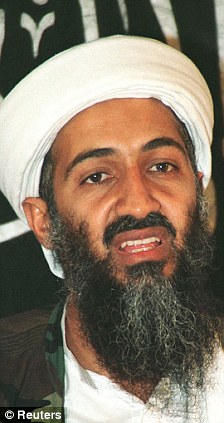
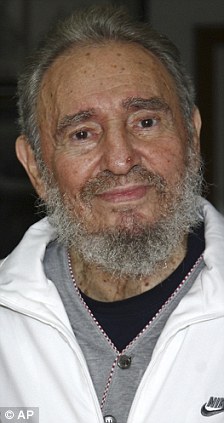
Osama bin Laden 'is a bought and paid for CIA agent' claims Cuban leader Fidel Castro


Former Cuban president Fidel Castro has claimed that Al Qaeda mastermind Osama bin Laden is a CIA agent during an interview with a state newspaper. However he did not elaborate further on the claims


Cuban leader Fidel Castro has claimed Al Qaeda mastermind Osama bin Laden is a bought-and-paid-for CIA agent.

The country's former president has said that the world's most wanted terrorist always popped up when former US President George W Bush needed to scare the world, and argued that recently published documents on the internet prove it.

Castro told state media: 'Any time Bush would stir up fear and make a big speech, bin Laden would appear threatening people with a story about what he was going to do.


Bush never lacked for bin Laden’s support. He was a subordinate.'

Castro said documents posted on the controversial WikiLeaks website 'effectively proved he (Bin Laden) was a CIA agent.' He did not elaborate further on the claims.

The comments were published today in the Communist party's daily newspaper, Granma.

They were the latest in a series of bold and provocative statements by Castro, who has emerged from exile to warn the planet is on the brink of a nuclear war.

Bizarrely, Castro even predicted that global conflict would mean cancellation of the final rounds of the World Cup in South Africa. He later apologised.

And last week, the 84-year-old began highlighting the work of Lithuanian investigative journalist Daniel Estulin, who he was meeting with when the Bin Laden comments came to light.
During the meeting, Estulin told Castro that the real voice of bin Laden was last heard in late 2001, not long after the September 11 attacks.

He said the person heard making warnings about terror attacks after that was a 'bad actor.'

Mr Estulin, is a well-known conspiracy theorist and wrote a trilogy of books highlighting the Bilderberg Club, whose prominent members meet once a year behind closed doors.

The secretive nature of the meetings and prominence of some members - including former U.S. Secretary of State Henry Kissinger and senior U.S. and European officials have led some to speculate that it operates as a kind of global government, controlling not only international politics and economics, but even culture.


Related Posts Plugin for WordPress, Blogger...

My Headlines World News Today

Celebrity Gossip Scandal News

Celebrity Uncensored Leaked Scandal News Photos