My World Earth News Headline Animator

My World Earth News
Showing posts with label libyan. Show all posts

Wednesday, June 15, 2011

Libyan rebels face setback after refinery hit


Workers inspect a damaged power generator of the oil refinery which was hit by a grad rocket of the forces loyal to Muammar Gaddafi at western Libyan city of Misrata on June 13, 2011.


Libyan rebels faced new obstacles in their campaign to march on Tripoli after shelling from Muammar Gaddafi’s forces damaged an oil refinery in the insurgent stronghold of Misrata, disrupting fuel supply lines.

A Reuters photographer in Misrata joined rebel units as they pushed their front several kilometres west yesterday to the outskirts of Zlitan, a town controlled by Gaddafi’s forces.

Any fighting over Zlitan would bring the rebellion closer to the capital Tripoli, the Libyan leader’s stronghold which lies 200km west of Misrata.

A doctor in a field hospital to the west of Libya’s third largest city said two rebels had been killed and a dozen wounded after the two sides traded heavy artillery fire.

Rebels from Misrata say tribal sensitivities prevent them from attacking Zlitan, and they are instead waiting for local inhabitants to rise up.

Late yesterday, six rockets hit generators at the refinery near Misrata port leaving them heavily damaged. An engineer on site said it was unclear how long it would take to repair.

Nato said it struck an armoured vehicle armed with anti-aircraft guns east of Tripoli today as well as a multiple rocket launcher and another anti-aircraft system.


A Nato statement said the alliance also struck an armed pickup truck, a tank, a multiple rocket launcher and an armoured vehicle in Misrata last night.

“These types of equipment have been used to indiscriminately target the civilian population throughout Libya,” the commander of the Nato mission, Lieutenant-General Charles Bouchard, said.

“Nato will maintain the pressure on the Gaddafi regime and continue to take action to protect civilians wherever they are under threat of attack.”

The fighting east of Tripoli came during an apparent lull in Nato bombardment of the Libyan capital, a lull which continued through today, although state television reported the alliance had bombarded targets in Al Jufrah in the centre of the country.

Nato defence chiefs were due to meet in Belgrade today to discuss the mission, after US Defence Secretary Robert Gates accused some European allies of failing to pull their weight in a mission he feared could run out of steam.

Libyan troops fired Grad rockets from positions controlled by Gaddafi’s forces over the border into Tunisia today, witnesses said, in an assault likely to raise already high tensions between the two countries.

The explosions, close to rebel territory along the border in Libya’s Western Mountains, caused no damage or injuries.

The last time Libyan forces fired rockets into Tunisia, on May 17, the Tunisian government threatened to report Libya to the UN Security Council for committing “enemy actions.”

Fighting flared at the weekend in the town of Zawiyah, 50km west of the capital — clashes the rebel leadership said were a sign that the momentum in the four-month-old conflict was shifting their way.

But a Zawiyah resident, who could only be identified as Mohamed, told Reuters by phone today that it had since gone quiet, with neither side having advanced much from their original positions.

“Things are now calm in Zawiyah. Gaddafi’s forces are still in their place in town and on the main road,” he said.

The main highway west from Tripoli to Tunisia, which had been closed because of the fighting, appeared to have re-opened.

“Violation of sovereignty”

A rebel spokesman in Zintan, in the rebel-held Western Mountains range southwest of Tripoli, said the town had been quiet yesterday after being subjected to its heaviest bombardment by pro-Gaddafi forces in several weeks on Sunday.

Gaddafi has said the rebels are criminals and al Qaeda militants. He has described the Nato military intervention as an act of colonial aggression aimed at grabbing Libya’s oil.

Western governments say they believe it is only a matter of time before Gaddafi’s 41-year rule ends under the weight of Nato military intervention, sanctions and defections.

Nato member Germany became the latest country to recognise the rebel council based in the second city of Benghazi as the legitimate representative of the Libyan people, giving heavyweight support to rebels poised to run the country.

France, Qatar, Italy and the United Arab Emirates have already recognised the Transitional National Council.

“We share the same goal — Libya without Gaddafi,” German Foreign Minister Guido Westerwelle said in Benghazi.

Libya’s foreign ministry in a statement condemned the visit as an “irresponsible step by the German state.”

“The visit by the foreign minister of ... Germany to Benghazi is a blatant violation of national sovereignty and ... international laws,” it said, adding that Germany was “recognising an imaginary council that only represents itself.”

Adding to diplomatic pressure on Gaddafi, US Secretary of State Hillary Clinton urged African leaders to abandon him.

Gaddafi has styled himself the African “king of kings” and over the years won support from many African states in exchange for financial help and generous gifts. Most countries on the continent have been lukewarm towards the rebels.

“Your words and your actions could make the difference... (in ending this situation) ...and allowing the people of Libya to get to work writing a constitution and rebuilding their country,” Clinton said in a speech to the African Union in the Ethiopian capital Addis Ababa.

Tuesday, June 14, 2011

Libyan rebels make fresh gains, Nato drops leaflets

+
A Libyan rebel fighter distributes pizzas to his comrades inside a mosque taken from forces loyal to Muammar Gaddafi, after rebels pushed several kilometres in the direction of Zlitan, west of the rebel-held port city of Misrata, June 13, 2011.

fresh gains on the western front yesterday, pushing back forces loyal to leader Muammar Gaddafi in a string of clashes that brought them closer to the capital Tripoli.

Late yesterday, Nato resumed bombing the Libyan capital with strikes hitting the east of the city.

A Reuters correspondent in the capital heard at least three loud explosions and saw smoke in the sky and a fire. He could hear planes flying above.


Libyan state TV said the bombings had struck military and civilian targets in Firnag, one of the biggest neighborhoods in the capital, and Ain Zara. It said there were casualties.

Insurgents tried earlier in the day to advance further in the east, aiming for the oil town of Brega in a bid to extend their control over the region, epicentre of the four-month rebellion against Gaddafi’s four-decade rule.

They seized the town of Kikla, 150km southwest of Tripoli, after government troops fell back, and pushed several km west of their Misrata stronghold to the outskirts of government-held Zlitan, Reuters photographers said.

Pro-Gaddafi forces retreated about nine km from Kikla and rebels were setting up defensive positions there, they said.

In Brussels, Nato spokesman Wing Commander Mike Bracken said rebel forces were making steady advances in the west and the Berber highlands, and appeared to “control the ground from Wazin to Jadu and Zintan as well as the town of Yaffran.

“In the east ... there has been little movement from either side and no significant changes to the intensity of activity.”

The push to Kikla came after weeks of deadlock between the rag-tag rebel army and government forces, though air strikes by Nato have taken their toll on Gaddafi’s better-equipped troops.

Rebels in the west said attacks on a Misrata oil refinery were not hampering supplies as first feared. Nato leaflets warning of helicopter strikes prompted some rebels to retreat from their newly captured positions outside Zlitan.

“We came back because of the leaflets from Nato. I hope there is some coordination between the fighters and Nato. Gaddafi’s forces are far away. Is it logical that Nato has no idea we took those positions?” local commander Mohammed Genei, 31, told Reuters. “Nato dropped the leaflets right on us.”

A leaflet obtained by Reuters showed a picture of a helicopter and a burning tank. “When you see these helicopters, it means it is already too late for you,” it said in Arabic. “There is no place to hide. If you continue threatening civilians, you will be killed.”

A Nato official said the alliance did drop leaflets warning of the possibility of attack by helicopters, but said this was west of Misrata, closer to Zlitan.

Even without the threat of Nato attack, the rebels said, they would not attack Zlitan because of tribal sensitivities but would wait for the local inhabitants to rise against Gaddafi.

Citing a rebel commander, the London Times newspaper said Gaddafi forces had hidden Grad rockets and ammunition in the Roman city of Leptis Magna, dating back to 200 BC.

The United Nations cultural body, Unesco, called on all sides to ensure the protection of Libya’s “precious legacy.”

“HOTSPOT FOR CLASHES”

Nato reported skirmishes around Brega and Ajdabiyah but said eastern Libya was relatively quiet. It said there were reports of a rebel offensive on Zawiyah, an oil port 30km west of Tripoli. “This area appears to be a hotspot for pro- and anti-Gaddafi clashes,” Bracken told the briefing in Brussels.

But a Zawiyah resident, who could only be named as Mohamed, told Reuters by phone yesterday that it had since gone quiet, neither side having advanced much since the skirmish.

The main highway west from Tripoli to Tunisia, which had been closed because of the fighting, reopened.

Nato said it struck armoured vehicles and rocket launchers east of Tripoli yesterday and vehicles in Misrata on Monday.

State television reported late yesterday the alliance had bombed Al Jufrah in central Libya for a second consecutive day. A Nato official denied any strike on Al Jufrah, but said it did strike an ammunition store at Waddan, not far from the city.

South African President Jacob Zuma accused Nato yesterday of abusing a UN resolution authorising it to protect Libyan civilians in order to pursue “regime change ... assassinations and foreign military occupation.”

Secretary of State Hillary Clinton urged African leaders on Monday to abandon Gaddafi, who has over the years won support from many African states in exchange for financial help.

Liberia heeded that call yesterday severing diplomatic ties with Gaddafi’s government, joining Senegal and Mauritania.

Nato defence chiefs met in Belgrade to discuss the mission, after Defense Secretary Robert Gates accused some European allies of failing to pull their weight.

A senior Nato commander appeared to raise questions about the alliance’s ability to intervene in Libya long-term.

“The Libyan crisis came as a surprise to, I guess, everybody ... We are conducting this operation with all the means we have, and the best we can. If the operation were to last long, of course, the resource issue will become critical,” General Stephane Abrial told the conference.

Republican US House Speaker John Boehner told President Barack Obama yesterday the administration would be in violation of the country’s 1973 War Powers Resolution on Sunday unless Libyan operations end by then or Congress authorises them.

The resolution prohibits US armed forces from being involved in military actions for more than 60 days without congressional authorisation.

Tunisia flew an F-5 warplane and a helicopter along its border with Libya after Libyan troops fired several rockets into Tunisia, close to rebel territory in the Western Mountains, causing no damage or injuries.

A Reuters journalist in Ryayna, 15km east of Zintan in the Western Mountains, said rebels had captured the village and Gaddafi’s forces had been pushed back.

Monday, May 9, 2011

Libya: Hundreds feared dead as migrant boat capsizes

Several hundred people are feared to have drowned off Libya, after a boat carrying some 600 refugees trying to reach Europe broke up at sea on Friday. The UN's refugee agency said 16 bodies, including two babies, had been found.


Monday, May 2, 2011

Libya’s Gaddafi survives air strikes, son killed


Spokesman Mussa Ibrahim, who took foreign journalists on a guided tour: “This is not permitted by international law. It is not permitted by any moral code or principle.Libyans in Benghazi celebrate May 1, 2011, following news that Libyan leader Muammar Gaddafi’s son was killed.

Libyan leader Muammar Gaddafi survived a Nato air strike on a Tripoli house that killed his youngest son and three grandchildren, a government spokesman said today.

Libyan officials took journalists to the house, which had been hit by at least three missiles. The roof had completely caved in in some areas, leaving mangled rods of reinforcing steel hanging down among chunks of concrete.

“What we have now is the law of the jungle,” government spokesman Mussa Ibrahim told a news conference. “We think now it is clear to everyone that what is happening in Libya has nothing to do with the protection of civilians.”

Gaddafi, who seized power in a 1969 coup, is fighting an uprising by rebels who have seized much of the eastern part of the country. British and French-led Nato forces are permitted under a United Nations resolution to mount air attacks on Gaddafi forces to protect civilians.

Inside one part of the villa hit late on yesterday, a beige corner sofa was virtually untouched, but debris had caved in on other striped upholstered chairs. The blasts had been heard across the city late yesterday.

A table football machine stood outside in the garden in a wealthy residential area of Tripoli. Glass and debris covered the lawns, and what appeared to be an unexploded missile lay in one corner.


There was no immediate Nato reaction, nor was any independent confirmation of the deaths possible. The appearance of an assassination attempt against Gaddafi could draw criticism.

It appeared to be the second Nato strike near to Gaddafi in 24 hours. A missile struck near the television station early yesterday when the Libyan leader was making an address in which he said he would never step down and offered talks to rebels.

Benghazi rebels, who control a vast swathe of the east of the country, insist they cannot trust Gaddafi.

‘Fight and fight’

Rifle fire and car horns rang out in the rebels’ eastern capital of Benghazi as news of the attack spread.

“The leader himself is in good health. He wasn’t harmed,” Ibrahim said. “His wife is also in good health.

“This was a direct operation to assassinate the leader of this country. This is not permitted by international law. It is not permitted by any moral code or principle.”

The announcement of the attack was made live on Libyan state television, and Tripoli residents began to fire small arms into the air.

US White House press secretary Jay Carney said the White House was aware of Libyan media reports that Gaddafi’s son had been killed and was monitoring the situation.

Ibrahim said Gaddafi’s youngest son, Saif al-Arab, had been killed in the attack. Saif al-Arab, 29, is one of Gaddafi’s less prominent sons, with a limited role in the power structure. Ibrahim described him as a student who had studied in Germany.

Gaddafi’s daughter was killed in a US air strike in 1986, ordered after a bomb attack on a West Berlin discotheque killed two US servicemen. Washington linked Tripoli to the attack.

“We will fight and fight if we have to,” Ibrahim said. “The leader offered peace to Nato yesterday and Nato rejected it.”

Fighting in Libya’s civil war, which grew from protests for greater political freedom that have spread across the Arab world, has reached stalemate in recent weeks, with neither side capable of achieving a decisive blow.

Libyan forces had reached the gates of Benghazi last month when Gaddafi appeared on television declaring he would crush the rebellion, showing “no pity, no mercy”. Days later the United Nations passed its resolution allowing the air strikes and saving the rebels from defeat.

Sunday, May 1, 2011

Nato hits Gaddafi convoy in East Libya


Libyans celebrate in Benghazi following news that Libyan leader Muammar Gaddafi’s son was killed in a Nato air strike.

A Nato air strike destroyed 45 vehicles of Muammar Gaddafi’s forces after they had killed at least five civilians in fighting in two east Libyan towns, an oil official and a rebel spokesman said today.

Gaddafi forces entered the towns of Jalu and Awlijah, south of the eastern frontline near Ajdabiyah, early yesterday and opened fire, killing at least five civilians and wounding more than 10, the rebel military spokesman said.

AbdelJalil Mayouf, information manager at Agoco oil company that controls rebel-held oilfields in the area, said that after that attack a Nato air strike destroyed a convoy of 45 vehicles belonging to pro-Gaddafi forces as they left Jalu.


He was citing reports he received from an Agoco employee at the oilfields who witnessed the strike yesterday.

Fighting between rebels and Gaddafi forces has stalled on the eastern front with the Libyan conflict in its third month, but sporadic fighting has broken out in remote eastern towns deep in the desert, like Kufra near the southeastern border.

Rebels say they suspect Gaddafi’s strategy is to hem in the rebel-held eastern territory along the coastline by seizing control of desert towns in the south and moving towards Tobruk near the Egyptian border.

“If you look at the map, it’s very clear what he is trying to do,” rebel military spokesman Colonel Ahmed Bani said. “He wants to make an arc down south of Ajdabiyah until the eastern border. He is trying to separate us from the eastern border.”

Tuesday, April 19, 2011

Libyan forces pound Misrata as 1,000 evacuated by sea


A chartered ship evacuated nearly 1,000 foreign workers and wounded Libyans from Misrata today as government artillery bombarded the besieged city that has come to symbolise the struggle against Muammar Gaddafi’s rule.

“We wanted to be able to take more people out but it was not possible,” said Jeremy Haslam, who led the International Organisation for Migration (IOM) rescue mission.

“Although the exchange of fire subsided while we were boarding ... we had a very limited time to get the migrants and Libyans on board the ship and then leave.”

A rebel spokesman said bombardments pounded Misrata for a fifth day today after shelling killed 17 people and wounded about 100, mostly civilians, yesterday.


Libya’s third-largest city, Misrata is the rebels’ main stronghold in the west and has been under siege by pro-Gaddafi forces for the past seven weeks. Evacuees say conditions there are becoming increasingly desperate and hundreds of civilians are believed to have been killed.

“The Gaddafi forces are shelling Misrata now. They are firing rockets and artillery rounds on the eastern side — the Nakl el Theqeel (road) and the residential areas around it,” Abdubasset Abu Mzeireq said this morning.

The Ionian Spirit steamed out of Misrata carrying 971 people, most of them weak and dehydrated migrants mainly from Ghana, the Philippines and Ukraine, heading for the rebel stronghold of Benghazi in eastern Libya.

It was second vessel chartered by the IOM, which took out nearly 1,200 migrants from Misrata last Friday.

Among the rescued group were 100 Libyans, including a child shot in the face, the IOM said in a statement.

“We have a very, very small window to get everyone out. We do not have the luxury of having days, but hours,” said IOM Middle East representative, Pasquale Lupoli.

“Every hour counts and the migrants still in Misrata cannot survive much longer like this.”

Pro-Gaddafi forces have also kept up an offensive on the rebels’ eastern frontline outpost of Ajdabiyah, which rebels want to use as a staging post to retake the oil port of Brega, 80km to the west.

One witness said he saw around a dozen rockets land near the western entrance to Ajdabiyah yesterday and many fighters fled as explosions boomed across the town.

Yesterday marked a month since the UN Security Council passed a resolution authorising force to protect civilians in Libya, leading to an international air campaign.

But despite Nato air strikes against Gaddafi’s armour, rebels have been unable to hold gains in weeks of back-and-forth fighting over the coastal towns in eastern Libya.

With Nato troops bogged down in Afghanistan, Western countries have ruled out sending ground troops, a position reinforced by the British prime minister yesterday.

“What we’ve said is there is no question of invasion or an occupation — this is not about Britain putting boots on the ground,” David Cameron told Sky News in an interview.

Scores of volunteer fighters and civilian cars carrying men, women and children yesterday streamed east from Ajdabiyah up the coast road towards Benghazi, where the popular revolt against Gaddafi’s 41-year rule began in earnest on February 17.

The United States, France and Britain said last week they would not stop bombing Gaddafi’s forces until he left power, although when or if that would happen was unclear.

The rebels pushed hundreds of kilometres towards the capital Tripoli in late March after foreign warplanes began bombing Gaddafi’s positions to protect civilians, but proved unable to hold territory and were pushed back as far as Ajdabiyah.

Just like Iraq?

In Tripoli, Gaddafi’s son, Saif al-Islam Gaddafi, said in an interview that the world had gone to war with Libya based on nothing more than rumour and propaganda.

“The biggest issue is the terrorists and the armed militia,” Saif Gaddafi told the Washington Post. “Once we get rid of them, everything will be solved.”

Government forces were hunting down “terrorists” in Misrata just as American forces did in Fallujah in Iraq.

“It’s exactly the same thing. I am not going to accept it, that the Libyan army killed civilians. This didn’t happen. It will never happen,” he said.

Once they were beaten, it would be time to talk of national reconciliation and democracy under a new constitution that would reduce his father’s role to a symbolic one, the Post quoted Saif Gaddafi as saying.

The London-educated son was once seen as a potential reformer but his comments indicated the Gaddafi was in no mood to compromise despite the international pressure. The rebels have rejected any solution that does not remove Gaddafi or his family from power.

The UN humanitarian affairs chief, Valerie Amos, speaking in Benghazi following a visit to Tripoli, said the government had given her no guarantees regarding her call for an overall cessation of hostilities to help the relief effort.

She also said she was extremely worried about the situation in Misrata.

“No-one has any sense of the depth and scale of what is happening there,” she said.” — Reuters

Wednesday, April 13, 2011

Gang-raped for two days, tortured and strangled: Libyan woman finally reveals full horrific details of attack by Gaddafi's thugs

* Iman al-Obeidi says she was held hostage by gang of 15 men, including a cousin of Colonel Gaddafi

A Libyan woman who publicly accused a gang of pro-Gaddafi militiamen - including Colonel Gaddafi's cousin - of gang-raping her has, for the first time, revealed the horrifying details of her alleged attack.

Iman al-Obeidi claimed she was forced into a militia car at a checkpoint, driven to a 'palace' and brutalised by 15 drunk men over a two-day period.

After bursting into a hotel full of foreign journalists to reveal her ordeal more than two weeks ago, the 28-year-old has been charged with slander by the Libyan government and she claims the regime is refusing to allow her to leave Tripoli to return to her family.


Interview: Iman al-Obeidi finally spoke to a CNN reporter about her ordeal after being detained by Gaddafi's troops.Ordeal: She described being raped by 15 men over two days before finally escaping
Intimidation: A Libyan government official grabs al-Obeidi as she reveals details of her attack to journalists
Scuffle: Sky News reporter Lisa Holland, bottom left, and FT journalist Charles Clover, back, attempt to protect al-Obeidi as she is threatened by government minders as she tries to tell her story


Libyan government spokesman Moussa Ibrahim confirmed Al-Obeidi had been raped but alleged she was a prostitute with a criminal record of petty crime and indecency.

However Al-Obeidi, who says she was a law graduate before the attack, vehemently denies Ibrahim's claims.

Still bearing scars and bruises, Al-Obeidi claimed her attackers had been drinking alcohol, which they poured into her eyes, nose, mouth and other parts of her body.

She also said she was subjected to a brutal attack with a Kalashnikov rifle and that one of her attackers was a cousin of Gaddafi.

Al-Obediei said she was returning home from a friend's house on the evening of March 24 when her taxi was stopped at a checkpoint and she was forced to climb into the militia's car when they discovered her ID card showed she was from the rebel-held east.

She said: 'There were a number of militiamen in the Toyota and another girl they had captured and stuffed on the floor of the car under their feet.'

She claims the two were taken to a large property, which looked like a palace, where her two-day rape and torture ordeal took place.

Al-Obeidi added: 'I kept fighting back. I hit back a lot and I kept fighting. They eventually tied my arms and legs together.'

She said that she was tied naked and left on the floor while a total of 15 drunk men took turns to attack her - sometimes three at a time. She alleged the men choked her, covered her head while they raped her and kicked her when they finished.

'My neck turned blue from being strangled,' she said.

Al-Obeidi controversially claimed that one of her attackers was a cousin of Gaddafi and the son of a government minister. She said she recognised him because she and her sister knew his family.

It wasn't until the third day of her captivity that Al-Obeidi was able to escape when another captured girl helped cut the rope from her legs.

She said she jumped out of a window and ran, naked and hysterical, towards the gate threatening the African guards with a metal rod.

She added: 'I could see fear in their faces when they looked at me — my hair was wild, I was naked and screaming.

'I ran down the side of the house screaming and crying and the [rapists'] car was chasing me.

'Neighbours started to come out to look and they protected me.'

Women in the neighbourhood brought her clothes and paid for her taxi. But when they asked if she wanted to go to a police station she refused, adding: 'I didn't go because that's not where I would find justice.'

She instead went straight to the Rixos hotel in Tripoli where she knew the foreign journalists were staying.

Al-Obeidi defied government minders to storm into the hotel on March 26 so she could tell her ordeal to the foreign press - and the television pictures of her outburst were shown around the world.

Journalists were forced to protect Al-Obeidi as Libyan government minders tried to silence her with physical force, with some calling her 'a dog'. Journalists ended up being punched themselves and their equipment was smashed by the minders.

Iman al-Obeidi was then arrested and charged with slander following her claims.

Since her outburst, Al-Obeidi said people on the streets had praised her bravery, with some cab drivers refusing to take her money and, in the rebel-held east, she has been hailed a hero for speaking out in the face of extreme intimidation.

She said: 'Many people - young men and women - come up to me in the street when they know I am Iman al-Obeidi and tell me they admire my courage.

In the east of Libya, she has been held up as a symbol of the brutality of Gaddafi's regime. Women in Benghazi have marched through the city carrying her picture, while local papers have published coverage of her story.

One eastern paper ran a front-page story about a man who offered to marry Al-Obeidi and dispatched a group of friends and relatives to discuss the matter with her parents in the eastern city of Tobruk.

Al-Obeidi was able to tell her story to two female journalists - alone and away from the Libyan government minders who have kept an almost constant watch over the foreign press.

The woman said after her arrest at the hotel she was detained for three days and was beaten, left to lie on the floor without food or drink before being released.

Now Al-Obeidi said the only thing she wants is to return to her family in opposition-controlled eastern Libya. However, the regime is refusing to let her leave Tripoi, she claimed.

'They are trying to punish me, as if I am some sort of enemy and so I am scared and I want to just go home,' she said.


Monday, March 28, 2011

Libya: 'Woman Who Claims Rape Is Now Free' Libyan woman claims rape by 15 soldiers Women protest against attacks by Gaddafi forces Libyan woman claims rape by 15 of Gaddafi's men Libyan Woman Accuses Gadhafi Troops of Rape

Above is an update of Eman al-Obeidy, the woman who burst into the foreign press dining room on Saturday telling of her gang rape by Qaddafi's men.


Gaddafi's hometown seized by rebels - Gaddafi makes rare appearance - Rebels regain key Libyan town - NATO to take over from coalition in Libya - Libyan Rebels Reclaim Oil Centers in Sweep West


Libyan rebels rain missiles on retreating Gaddafi troops as their march west closes in on dictator's home town

* Rebels pictured firing missiles at Gaddafi forces near Bin Jawad
* Opposition forces 60 miles from dictator's home town Sirte
* Government announces ceasefire in Misrata
* RAF Tornados bomb ammunition dumps this morning
* Russia says air strikes go beyond UN mandate
* Around 1,500 migrants land in Italy in first wave of refugees

Dramatic images today showed the rebel advance up the coast of Libya, as opposition forces closed in on Colonel Gaddafi's hometown.

The rebels have fought their way to within 60 miles of Sirte, where the dictator was born, and were locked in a battle with government forces near the town of Bin Jawad.

The images show opposition forces firing missiles at government troops as smoke billows across the battlefield.

They have made a lightning advance west from their stronghold in Benghazi over the past few days, aided by international air strikes, and have now recovered all the territory lost in a pre-no-fly-zone retreat earlier this month.

In the west, Gaddafi's forces announced a cease fire in the town of Misrata this afternoon. The dictator's forces have been shelling the rebel-held city over the past days, but have also been hit hard by international air strikes.

RAF Tornados bombed ammunition dumps in the Sabah region early this morning, using Storm Shadow missiles to blow up bunkers housing ammunition intended for the forces attacking Misrata


Re-taken: Rebels celebrate in the town of Ras Lanuf. They said they would push on soon towards Gaddafi's stronghold of Sirte
On the march: Rebels are seen inside an oil terminal compound after it was retaken by rebels from Muammar Gaddafi's forces in Zueitina, 528 miles east of Tripoli
Decimated: A Libyan rebel stands near a wrecked Gaddafi tank near the East gate of Ajdabiya
March west: Rebels walk past a burning multi-rocket launcher at sunset outside the oil rich town of Ras Lanuf
Out of action: A Gaddafi tank burns near Ajdabiya
Taking cover: Rebel fighters return fire after being ambushed on the road to Sirte
Fog of war: A plume of smoke rises across the battlefield as rebels watch the fighting
Opening fire: Rebels fire missiles at pro-Gaddafi forces near the town of Bin Jawad, which was seized in the advance last night 


The MoD's Major General John Lorimer said: 'Following the retreat of Colonel Gaddafi's forces from most of the coastal towns east of Sirte, RAF Tornados have joined other coalition aircraft patrolling over Misrata where, despite significant losses as a result of air strikes, the regime continues to mount attacks on the town.

He spoke after the Russian government accused the international coalition of going beyond its UN mandate and taking sides in a civil war.

Foreign Secretary Sergey Lavrov said: 'We consider that intervention by the coalition in what is essentially an internal civil war is not sanctioned by the U.N. Security Council resolution.'

Meanwhile, the rebel advance in the east is meeting stiffening resistance as it approaches Sirte.

'Sirte will not be easy to take,' said General Hamdi Hassi, a rebel commander at Bin Jawwad. 'Now because of NATO strikes on (the government's) heavy weapons, we're almost fighting with the same weapons, only we have Grad rockets now and they don't.'

Libya's rebels have recovered hundreds of miles of flat, uninhabited territory at record speeds after Gaddafi's forces were forced to pull back by international air strikes.

Hassi said there was fighting now just outside the small hamlet of Nafouliya, 60 miles from Sirte, and scouting parties had found the road ahead to be heavily mined.

He added that the current rebel strategy was to combine military assault with an attempt to win over some of the local tribes loyal to Gaddafi over to their side.

'There's Gaddafi and then there's circles around him of supporters, each circle is slowly peeling off and disappearing,' Hassi said. 'If they rise up it would make our job easier.'

Sirte will not be easy to take,' said General Hamdi Hassi, a rebel commander at Bin Jawwad. 'Now because of NATO strikes on (the government's) heavy weapons, we're almost fighting with the same weapons, only we have Grad rockets now and they don't.'

Libya's rebels have recovered hundreds of miles of flat, uninhabited territory at record speeds after Gaddafi's forces were forced to pull back by international air strikes.

Hassi said there was fighting now just outside the small hamlet of Nafouliya, 60 miles from Sirte, and scouting parties had found the road ahead to be heavily mined.

He added that the current rebel strategy was to combine military assault with an attempt to win over some of the local tribes loyal to Gaddafi over to their side.
'There's Gaddafi and then there's circles around him of supporters, each circle is slowly peeling off and disappearing,' Hassi said. 'If they rise up it would make our job easier.'

Witnesses in Sirte reported there had been air strikes on Sunday night before and again early on Monday morning, but the town was quiet, and dozens of fighters loyal to Gaddafi could be seen roaming the streets.

Moving quickly westward, the advance retraced their steps in the first rebel march toward the capital.

But this time, the world's most powerful air forces have eased the way by pounding Gaddafi's military assets for the past week.

As the fighting continued the first wave of refugees from Libya arrived in Italy. Three boats carrying around 1,000 migrants docked in Siciliy and hundreds more are said to be on their way.

'There are no more controls on the Libyan coast now. Thousands are leaving,' a 26-year-old Eritrean woman rescued from one of the boats said.

Sirte is strategically located about halfway between the rebel-held east and the Gaddafi-controlled west along the Mediterranean coast. It is a centre of support for Gaddafi and is expected to be difficult for rebels to take.

West of Sirte is the embattled city of Misrata, the sole place in rebel hands in the country's west. Residents reported fighting between rebels and Gaddafi loyalists who fired from tanks on residential areas.

Rida al-Montasser, of the media committee of Misrata, said that nine young men were killed and 23 others wounded when Gaddafi brigades shelled their position in the northwestern part of the city on Sunday night. He also said that the port was bombed.

The Libyan state news agency also reported that there had been air strikes against the southern town of Sabha, which remains strongly loyal to Gaddafi and is a major transit point for ethnic Tuareg fighters from Mali and Niger fighting for the government.

JANA said the strikes destroyed a number of houses, though past strikes on Sabha, 385 miles south of Tripoli, targeted the airport and the flow of foreign fighters reinforcing the regime.

The rebels took back two key oil complexes along the coastal highway and promised to quickly restart Libya's stalled oil exports, prompting a slight drop in the soaring price of crude oil to around $105 a barrel.

In Washington, Defence Secretary Robert Gates said he could not offer a timetable for how long the Libya operation could last, as the Obama administration tried to bolster its case for bringing the United States into another war in the Muslim world.

The U.N. Security Council authorised the operation to protect Libyan civilians after Gaddafi launched attacks against anti-government protesters who demanded that he step down after nearly 42 years in power. The air strikes have crippled Gaddafi's forces, allowing rebels to advance less than two weeks after they had seemed at the brink of defeat.

The assault on Sirte, where most civilians are believed to support Gaddafi, however, potentially represents an expansion of the international mission to being more directly involved with regime change.

'This is the objective of the coalition now, it is not to protect civilians because now they are directly fighting against the armed forces,' Khaled Kaim, the deputy foreign minister, said in the capital, Tripoli. 'They are trying to push the country to the brink of a civil war.'

Turkey, meanwhile, has confirmed that even as rebel forces advance on Sirte it has been working with the government and the opposition to set up a ceasefire.

'We are one of the very few countries that are speaking to both sides,' Foreign Ministry Spokesman Selcuk Unal said, without confirming whether Turkey had offered to act as mediator.

Turkey's prime minister Recep Tayyip Erdogan also told reporters his country will take over the running of the airport in Benghazi to facilitate the transport of humanitarian aid to Libya. He did not say when, however.

Tripoli was also hit with air strikes again last night , with at least four explosions and heavy anti-aircraft gunfire reverberating through the capital.

Libyan state TV claimed in a news flash that both 'civilian and military areas' in Tripoli had been hit by the 'crusader, colonialist aggressors'.

Some suspect Gaddafi is withdrawing his forces from the east of the country to stage a last stand in the west. It was reported that government military vehicles were fleeing Sirte as the pro-democracy army threatened to bear down.

The Gaddafi regime on Saturday acknowledged the air strikes had forced its troops to retreat and accused international forces of choosing sides.

'This is the objective of the coalition now, it is not to protect civilians because now they are directly fighting against the armed forces,' Khaled Kaim, the deputy foreign minister, said in the capital, Tripoli.

'They are trying to push the country to the brink of a civil war.'

Gaddafi himself remained elusive at the weekend, with a government spokesman suggesting he is moving around Libya to keep his location secret. However, a video shown on state TV claimed to show a car carrying Gaddafi surrounded by adoring crowds.

A spokesman said: 'He is leading the battle. He is leading the nation forward from anywhere in the country.

'He has many offices, many places around Libya. I assure you he is leading the nation at this very moment and he is in continuous communication with everyone around the country.'

One resident in Misrata said 115 people had been killed in the city in a week and that snipers were still shooting people from rooftops.


Monday, March 21, 2011

Remains of Gaddafi’s force smoulders near Benghazi


Muammar Gaddafi’s wrecked tanks and other army vehicles smouldered on a strategic road in east Libya today after Western powers launched air strikes that galvanised embattled rebels.

Rebels who had been driven back to their stronghold of Benghazi by the Libyan leader’s air, sea and land offensive in the past two weeks were returning in 4x4 pick-ups to the town of Ajdabiyah, the hard fought over gateway to the east.

The road the rebels drove was a scene of devastation. This correspondent counted at least 14 corpses, though the scale of the bombardment made identifying bodies difficult.

“This is all France ... Today we came through and saw the road open,” said rebel fighter Tahir Sassi, surveying one area where blackened vehicles lined the road and lamp posts were cut in two or bent over.

About 14 tanks, 20 armoured personnel carriers, two trucks with multiple rocket launchers and dozens of pick-ups — all destroyed — were visible, indicating the strength of the force sent to retake Benghazi from rebels.

One tank was a blackened wreck with its turret blown off. Another tank, a tank transporter and armoured personnel carriers smouldered. A few hundred metres (yards) ahead, munitions were still exploding as flames licked around vehicles and stores.


Rebels had pleaded for military intervention as they were were pushed back and after Gaddafi vowed “no mercy, no pity” as he advanced towards Benghazi where the interim rebel National Libyan Council has its headquarters.

France led the calls for intervention and its planes were the first into Libyan airspace to launch raids, before US and British warships and submarines fired Tomahawk missiles overnight against air defences.

‘NO MORE RETREAT’

“Gaddafi is like a chicken and the coalition is plucking his feathers so he can’t fly. The revolutionaries will slit his neck,” said Fathi Bin Saud, a 52-year-old rebel carrying a rocket propelled grenade launcher and surveying the wreckage.

“There is no more retreat, we are going forward from now on,” he said. “Not all of this is the coalition. We did some of it as well. They encourage us. We were fighting even before they came. This has raised our morale.”

Rebels, who have mainly relied on 4x4 pickups with machine guns, were heavily outgunned by Gaddafi before the West acted.

They reached the town of Bin Jawad about 525km east of Tripoli before being driven back to Ajdabiyah, more than 700km from the capital.

Battle debris on the road out of Benghazi showed Gaddafi’s forces had nearly breached the inner parts of the city. Near Tarria village about 20km south of Benghazi on the highway to Ajdabiyah, locals said they had advanced up the road early yesterday and were only beaten back by the first foreign air strikes after fighting reached the suburbs.

Civilians and fighters clambered on the ruined tanks, taking photos and picking through the pockets of the dead.

Mohamed Joma, who said he was a pharmacist, said the planes had struck about 4 am that morning.

“Look, the tanks were pointing to Benghazi. They wanted to go to Benghazi. They did not escape,” he said.

Some of the bodies on the road were charred, others were already covered with blankets. Some were alongside vehicles and one lay inside a destroyed ambulance, with no sign of those who would have attended him.

Flesh and blood was smeared on the ground at one spot, where there were bandages scattered on the floor.

Gaddafi’s forces about 20km south of Benghazi appeared to have been taken by surprise by one air strike on their camp.

Enough bedding and clothes for hundreds of men littered the area for 200m on either side of the road, along with boots, body armour, cigarettes and cassette tapes.

“Tell the West to destroy Gaddafi slowly, piece by piece by piece, the way he did to us for 40 years,” said Jamal al-Majbouri, who owns a farm nearby.

In between meetings on Libya, Obama continues Latin America trip in Chile


- President Obama will arrive here Monday afternoon, continuing his Latin America tour even as he and his national security staff closely monitor the situation in Libya.

Video of coalition fighter jets, military planes activity in Italy, France - Gaddafi compound hit by missile as dozens die in coalition strikes - Video of anti-aircraft fire lighting up the sky in Libya


Western powers strike Libya for second night- Libyan rebels welcome air strikes, no ground troops


A rebel fighter points his gun at a suspected Gaddafi supporter as other rebels try to protect the suspected supporter, on a road between Benghazi and Ajdabiyah, near Ajdabiyah, today March 21, 2011.

Libyan rebels welcome more air strikes by foreign forces against Muammar Gaddafi’s army but do not want foreign ground troops to intervene in the war, a rebel spokesman said today.

“The committee rejects foreign troops on the ground but we encourage the bombardment of Gaddafi’s army,” Ahmed El-Hasi, a spokesman for the February 17 opposition coalition, said in the eastern city of Benghazi.

The rebels’ aim was still to capture the capital Tripoli, but they wanted to achieve that without foreign offensive action, he told a news briefing.


Western powers launched a second wave of air strikes on Libya early today after halting the advance of Muammar Gaddafi’s forces on Benghazi and targeting air defences to let their planes patrol the skies.

The UN-mandated intervention to protect civilians caught up in a one-month-old revolt against Gaddafi drew criticism from Arab League chief Amr Moussa, who questioned the need for a heavy bombardment, which he said had killed many civilians.

But the United States, carrying out the air strikes in a coalition with Britain, France, Italy and Canada among others, said the campaign was working and dismissed a ceasefire announcement by the Libyan military yesterday evening.

Britain’s Defence Ministry said one of its submarines had again fired Tomahawk cruise missiles last night as part of a second wave of attacks to enforce the UN resolution.

“We and our international partners are continuing operations in support of the United Nations Security Council Resolution 1973,” a ministry spokesman said.

The intervention is the biggest against an Arab country since the 2003 invasion of Iraq. Withdrawal of Arab support would make it much harder to pursue what some defence analysts say could in any case be a difficult, open-ended campaign with an uncertain outcome.

Asked about Moussa’s comments, Michele Flournoy, Under Secretary at the US Department for Defence, told the BBC: “I think that may be the case that people don’t understand the military dimensions of what was required to establish the no-fly zone but I can tell you that we continue to have messages of support, statements of support from a number of Arab countries.”

French government spokesman Francois Baroin said today: “There is no information about killed civilians that the French command is aware of.”

Italy said it had warplanes in the air, after US and British warships and submarines launched 110 Tomahawk missiles on Saturday night and yesterday morning.

Benghazi not free from threat

Vice Admiral Bill Gortney, director of the US military’s Joint Staff, told reporters there had been no new Libyan air activity or radar emissions, but a significant decrease in Libyan air surveillance, since strikes began on Saturday.

Benghazi was not yet free from threat, said Gortney, but Gaddafi’s forces in the area were in distress and “suffering from isolation and confusion” after the air assaults.

Late last night, Libyan officials took Western reporters to Gaddafi’s compound in Tripoli, a sprawling complex that houses his private quarters as well as military barracks, anti-aircraft batteries and other installations, to see what they said was the site of a missile attack two hours earlier.

“It was a barbaric bombing,” said government spokesman Mussa Ibrahim, showing pieces of shrapnel that he said came from the missile. “This contradicts American and Western (statements) . . . that it is not their target to attack this place.”

A Libyan military spokesman announced a new ceasefire yesterday, saying that “the Libyan armed forces . . . have issued a command to all military units to safeguard an immediate ceasefire from 9pm (1900 GMT) this evening”.

Both before and after he spoke, heavy anti-aircraft gunfire boomed above central Tripoli.

Outside Benghazi, smouldering, shattered tanks and troop carriers from what had been Gaddafi’s advancing forces littered the main road. The charred bodies of at least 14 government soldiers lay scattered in the desert.

But with Gaddafi having vowed to fight to the death, there were fears his troops might try to force their way into cities, seeking shelter from air attacks among the civilian population.

In central Benghazi, sporadic explosions and heavy exchanges of gunfire could be heard in the streets late yesterday evening. A Reuters witness said the firing lasted about 40 minutes.

In Misrata, the last rebel-held city in western Libya, government tanks moved in after a base used by Gaddafi’s forces outside was hit by air strikes on Saturday, residents said.

“There is fighting between the rebels and Gaddafi’s forces,” Abdelbasset, a spokesman for the rebels in Misrata, told Reuters yesterday afternoon. “Their tanks are in the centre of Misrata . . . There are so many casualties we cannot count them.”

Civilian casualties

A Libyan government health official said 64 people had been killed by Western bombardment on Saturday and yesterday morning, but it was impossible to verify the report independently.

Libyan state television showed footage from an unidentified hospital of what it called victims of the “colonial enemy”. Ten bodies were wrapped in white and blue bed sheets, and several people were wounded, one of them badly, the television said.

The Arab League’s Moussa called for an emergency meeting of the group’s 22 states to discuss Libya. He requested a report on the bombardment, which he said had “led to the deaths and injuries of many Libyan civilians”.

“What is happening in Libya differs from the aim of imposing a no-fly zone, and what we want is the protection of civilians and not the bombardment of more civilians,” Egypt’s state news agency quoted him as saying.

There was no immediate public backing for his call from any government in the region, however.

Arab support for a no-fly zone provided crucial underpinning for the passage of a UN Security Council resolution last week that paved the way for Western action to stop Gaddafi killing civilians as he fights an uprising against his 41-year rule.

US President Barack Obama spoke to Jordan’s King Abdullah, while Vice President Joe Biden telephoned leaders in Algeria and Kuwait to shore up Arab support.

A spokesman for the rebel movement, Abdel Hafiz Ghoga, criticised Moussa’s comments, telling Al Jazeera that more than 8,000 Libyans aligned with the rebel movement had been killed.

“What is the mechanism that stops the extermination of the people in Libya, what is the mechanism, Mr Secretary-General?” he said. “If the protection of civilians is not a humanitarian obligation, what is the mechanism that you propose to us?”

‘Colonial enemy’

The US chairman of the Joint Chiefs of Staff, Admiral Mike Mullen, said the no-fly zone was now in place.

But Defence Secretary Robert Gates said the United States would not have a “pre-eminent role” in maintaining it, and expected to turn over “primary responsibility” within days, perhaps to Britain or France.

US officials, eager to avoid similarities to the invasion of Iraq and the toppling of Saddam Hussein, have been playing down Washington’s role and emphasising that overthrowing or killing Gaddafi is not the goal of the attacks on Libya.

Mullen told CBS television the endgame of the campaign was “very uncertain” and acknowledged it could end in a stalemate.

Gates told reporters: “I think this is basically going to have to be resolved by the Libyans themselves.”

In Brussels, Nato envoys failed to agree on any alliance involvement in enforcing the no-fly zone.


Nato members Turkey and Germany have spoken out against the zone, and diplomats said France had argued against involvement by an alliance whose reputation in the Arab world had been tainted by its involvement in the war in Afghanistan.

French planes fired the first shots of the intervention on Saturday, destroying tanks and armoured vehicles near Benghazi.

France sent an aircraft carrier towards Libya and its planes were over the country again yesterday, defence officials said. Britain said its planes had targeted Libya’s air defences, mainly around the capital Tripoli.

Other countries, including Qatar, also dispatched aircraft to participate in the operation, US officials said.

Some Gaddafi forces pulling back, says US official


Spanish ground crew work on an F-18 jet fighter plane at the Nato air base of Decimomannu, in the southern Italian island of Sardinia, March 20, 2011. Nato ambassadors on Sunday approved an operations plan for the alliance to help enforce a UN arms embargo on Libya, a Nato statement said.

Forces loyal to Libyan leader Muammar Gaddafi “pulled back” from the rebel stronghold of Benghazi and two other towns after UN-authorised airstrikes, a US national security official said today.

The official, who declined to be identified, said advances by Gaddafi’s forces against Benghazi, Ajdabiya and Misrata had “stalled” as a consequence of the military action by US and European forces that began on Saturday.

But he said Gaddafi’s forces remained active and the United States did not believe the Libyan leader was fulfilling promises to implement a ceasefire.

'Western military strikes unjustified' - World divided on allied action in Libya


Friday, March 18, 2011

How British forces could enforce a no-fly zone

British forces will be heavily involved in the attempt to prevent Gaddafi crushing the uprising in Libya.

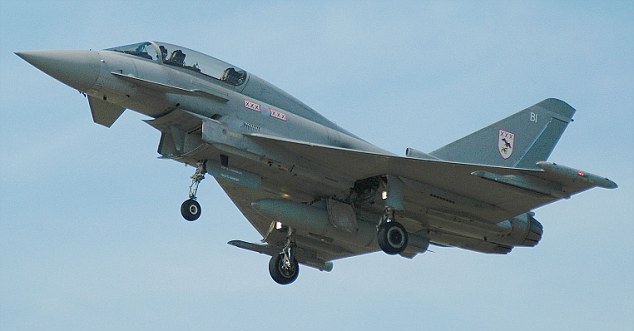
Military experts predict the RAF’s Typhoon fighter jets – which are not fully deployed in Afghanistan – are likely to be among the first sent out to establish and police the no-fly zone.

The multi-role jets are capable of delivering the latest high-accuracy bombs, and their capabilities as fighter aircraft far exceed those of Gaddafi’s ageing Russian jets.


The British fighters are likely to be deployed alongside French aircraft initially, although it is hoped they could be joined quickly by aircraft from at least one Arab nation, possibly Saudi Arabia or the United Arab Emirates.

Foreign Secretary William Hague indicated yesterday that the no-fly zone would be policed from land bases – avoiding criticism of the recent cuts to the Royal Navy, which severely limit the capacity of the UK to carry out airborne operations from the sea.

Allied forces could use French bases along the Mediterranean or the British base in Cyprus. Negotiations have also been under way about the possibility of operating some aircraft from bases in Arab countries.

Italy last night said it would make its military bases available to enforce the UN resolution. Its airbase at Sigonella in Sicily is one of the closest Nato bases to Libya.

U.S. navy aircraft carriers in the Mediterranean are initially expected to provide radar and logistical support.

The RAF’s ageing Nimrod reconnaissance aircraft, which were recently given a temporary reprieve from the scrapyard, could also play a role in monitoring the movement of Gaddafi’s forces. British special forces will also be involved in the operation. The size of the SAS has increased rapidly in recent years and experts believe special forces units could be deployed to Libya without affecting operations elsewhere.

They will be dropped behind enemy lines to identify potential targets for bombing raids. They could also be asked to carry out other covert missions designed to weaken the forces remaining loyal to the Libyan tyrant.

Experts last night suggested that British warships could also be deployed to the region to carry out bombardments along the coast or to protect merchant shipping from attacks by the Libyan navy.

UN approve NO FLY ZONE


Libya declares immediate ceasefire but Gaddafi forces keep on bombing

* 25 people dead after bombardment of Aidabiya and Misrata
* Cameron: Tornado and Typhoon fighters on way to Libya
* Gaddafi is 'already bombing rebel stronghold of Benghazi'
* Military action against Gaddafi backed by ten votes to zero
* Libyan dictator threatens planes and ships in Mediterranean
* Country's air space now closed to all traffic ahead of attack
* Commons WILL have debate on intervention on Monday

Libya today continued to blast rebel fighters with a brutal bombardment from land and sea despite the regime claiming it had called a cease fire.

In a day of rapid developments after the UN agreed to launch air strikes, foreign minister Moussa Koussa said all fighting had stopped.

However, rebels claimed there was still shelling in the towns of Ajdabiya and Misrata, the last rebel-held city in the western half of the country. Bombing left as many as 25 people in Misrata dead


Tough talk: David Cameron (right) and Foreign Secretary William Hague leave Downing Street today after an emergency Cabinet meeting on the Libyan crisis.Warning: Gaddafi took the the airwaves last night to say 'We will make their lives hell because they are making our lives hell. They will never have peace'


Even as Koussa spoke, David Cameron was on his feet in the Commons to confirm that RAF fighter jets had received orders to go to the Middle East.

The Prime Minister confirmed preparations to deploy RAF Tornado and Typhoon fighters were well underway.

The aircraft will join an international task force in the region in the next hours with air strikes expected imminently.

The move follows last night's UN resolution authorising 'all measures necessary' short of sending in ground troops to protect the Libyan population.

Speaking in the Commons, Mr Cameron called upon Gaddafi to immediately stop attacking his own people and stressed that there had been 'appalling' human rights abuses.

'The clock is now ticking,' he said. 'We need now a sense of urgency because we do not want to see a blood bath in Benghazi and further repression and killing of innocent civilian life in Libya.'

The Prime Minister told Parliament that there would be a Commons debate on intervention in the Middle East on Monday.

He is due to make a statement later and is travelling to France for a crisis summit tomorrow.
British armed forces would not be deployed lightly or 'without careful thought,' Mr Cameron said.


'We have, I believe, in this case given extremely careful thought to the situation that we have in hand.
'I think it is absolutely right that we played a leading role on the UN Security Council to secure permission for this action and I believe it is absolutely right that we now work with allies to make sure that resolution is brought about.

'I know there will be many people in our country who will now want the questions answered about what we are doing and how we will go about it and I intend to answer all those questions in the hours and days ahead and to work with our brave armed services to make sure that we do the right thing for the people of Libya, for the people of our country and for the world as a whole.'

As well as deploying fast jet fighters, Britain would be deploying surveillance and air-to-air refuelling aircraft.

The Prime Minister said that a 'clear statement' would be issued later today setting out what the international community now expected Gaddafi to do.

He said action was urgently needed as Libyan warplanes had already begun bombing the rebel stronghold of Benghazi in preparation for what was expected to be an all-out assault on the city.

Earlier, Mr Cameron chaired an emergency session of the Cabinet where ministers were advised on the legal position by the Attorney General Dominic Grieve.

The PM spoke to Barack Obama last night and French President Nicolas Sarkozy this morning to discuss the situation.

The UN Security Council’s vote in favour of a no-fly zone and air strikes against Colonel Gaddafi’s forces came last night after weeks of indecision on the world stage.

By ten votes to zero, it backed ‘all necessary measures’ short of a full-scale ground invasion ‘to protect civilians and civilian-populated areas’.

Anticipating the move, Gaddafi had threatened to attack any air or maritime traffic in the Mediterranean, including civilian targets.

He took to the airwaves to condemn any UN action as an act of ‘flagrant colonisation’. ‘This is craziness, madness, arrogance,’ ranted the dictator.

‘If the world gets crazy with us we will get crazy too. We will respond. We will make their lives hell because they are making our lives hell. They will never have peace.’

Gaddafi had earlier told Libyan rebels that his mercenaries would invade Benghazi, saying: ‘There will be no mercy. Our troops will be coming to Benghazi tonight.’

Diplomatic sources in Paris said military action might come as soon as today and could include France, Britain, possibly the U.S. and one or more Arab states.

But senior defence sources in Britain warned action would not take place straight away and the U.S. said enforcement of the no-fly zone would begin on Sunday or Monday.

‘We have to deconflict the assets of those who will take part and who will do what,’ said one. ‘It won’t be immediate.’

U.S. Secretary of State Hillary Clinton said there would be action to protect the planes and the pilots, ‘including bombing targets like the Libyan defence systems’.

Italy announced it was opening its air force and naval bases in Sicily for operations against Libya – another potential base for British jets.

The UN Security Council’s resolution was passed 10-0 with abstentions from China, Russia, Brazil, India and Germany.

The resolution included freezing the assets of Libyan National Oil Corp and the central bank because of their links to Gaddafi. It was proposed by the UK, France and Lebanon.

Celebratory gunfire was heard in Benghazi following the vote. There was also joy in Tobruk, another rebel-held town.

The move is a diplomatic coup for David Cameron, one of the first leaders to advocate intervention despite President Obama’s reluctance to allow the U.S. to be drawn into another Middle East war.

Foreign Secretary William Hague said: ‘We have been clear that the world would not accept Gaddafi’s brutality against his own people.

‘This resolution is the expression of that resolve. It is a positive response to the call by the Arab League last weekend for measures to protect and safeguard the civilian population of Libya and it is the culmination of a great deal of hard work in the last few days.

‘This resolution calls for an immediate ceasefire. For an end to violence. We have said all along that Gaddafi must go. It is necessary to take these measures to avoid greater bloodshed.’

Sir Mark Lyall Grant, British ambassador to the UN, said the resolution ruled out a foreign occupation force in any part of Libya.

Malcolm Rifkind, a former foreign secretary, said: ‘I’m absolutely delighted. Without action of this kind, Benghazi would have been a bloodbath.

‘By the standards of the last 20 years, this is a remarkable vote. This is a tremendous morale booster for Libyans, not just in Benghazi.’

 Anger: Supporters of Gaddafi chants slogans and show their displeasure at the decision during a protest in Tripoli

 Gaddafi supporters: Libyan deputy foreign minister Khaled Kaim said at a news conference that the vote amounted to an agreement for Libyans to kill each other


 Warning: Gaddafi took the the airwaves last night to say 'We will make their lives hell because they are making our lives hell. They will never have peace'

 Frontline: Libyan rebels pose on a tank captured from Government forces near Sultan, south of Benghazi


 Determined: A Libyan rebel grimaces as he prepares for combat in Benghazi

 Solidarity: UK Representatives Mark Lyall and Susan Rice for the U.S. sit together as they raise their hands in support of a no-fly zone over Libya during the meeting of the UN security council last night

 In session: Member states including both the UK and U.S. vote to approve the resolution during the meeting of the Security Council last night

Joy: Several rebels take to their cars to celebrate following the announcement of the resolution

Related Posts Plugin for WordPress, Blogger...

My Headlines World News Today

Celebrity Gossip Scandal News

Celebrity Uncensored Leaked Scandal News Photos